Mental Punishments

Elisa A. Escalante/ LCSW/ 12-27-2025

Mental disorders are finally getting some recognition and empathy, but there is still a long way to go with educating our general public. One topic that is rarely highlighted, is how our mental illnesses can bleed onto other people. People do not choose to have mental disorders, it’s an unfortunate reality that many people must live through. And with these disorders, we may not always be aware of how our symptoms can impair our relationships. This blog is to help divide that gap. People with mental health conditions must understand how their symptoms impact the people around them. People that are in relationships with those that have mental health conditions would benefit from education regarding the symptoms so they understand that it is not on purpose, and it is not usually personal.

Depression can be caused by various factors. This includes a chemical imbalance, such as lower amounts of serotonin, endorphins and oxytocin. Social environmental stressors could include: chronic boredom, neglect, abuse, grief and abandonment wounds. Depression also has specific cognitive distortions that can perpetuate it: rumination’s, compare and despair thoughts, and pessimistic thought patterns. And from a behavioral standpoint, those that are often sedentary and spend a lot of time indoors and on screens will have heavier depressive bouts. In their relationships, the depressed person will often be unable to access joy even during fun times where everyone else is happy. People with depression may even have a good time, but be unable to smile or verbalize it. Their affect will appear to be bored, sad, or irritable. Their loved ones might interpret this as a genuine disinterest or a lack of gratitude. Their loves ones will also have difficulty believing that the depressed person loves them, as they cannot always feel or express their love. But the truth is they lack the chemicals, healthy thought templates and capacity to access joy.

Anxiety conditions come with a lot of nagging thought patterns and debilitating physiological symptoms. Thought patterns include future predicting, catastrophizing, mind reading, ‘should and must’ obligatory thoughts, and over generalizations. Somatic symptoms include heart palpitations, labored breathing, muscle tension, shakiness, dizziness and/ or migraines. Behaviorally, people with anxiety may compulsively google their symptoms and research conditions which could exacerbate their worries even more. They are also more likely to question or interrogate their friends/ family or intimate partners because they need answers. They need reassurance, and if their brain does not get answers, it will jump to conclusions or obsessively hunt for them. Unfortunately this could scare away or irritate their loves ones and perpetuate what they already fear; losing people, or being burdensome because of their anxiety. Other notable subcategories of anxiety include; performance anxiety, health anxiety, and social anxiety. If they avoid taking risks due to their fears, this is known as ‘sabotage’.

PTSD (Post traumatic stress disorder) is both a mental and physiological disorder that is caused by life or death situations, or chronic high stress situations repeated over time. It is a body and mind that has adapted to constant danger. More trauma, more triggers. Any/ everything can be a trigger; people, places, conversations (words, tones, phrases, pitch) inanimate objects, situations, emotions, thoughts, body language, bodily sensations etc. When triggered, their primal brain goes into the fight, fly, freeze, fawn or dissociate responses, and the frontal lobe shuts down. This makes it next to impossible to de escalate a situation as the triggered individual cannot access their prefrontal cortex. People with PTSD are known to be ‘reactive’, angry or ‘dramatic’ according to their loves ones. It’s important to note that people do not choose their triggers. Life, traumas and grievances decide those triggers. The person with PTSD carries the burden of having to regulate their bodies/ minds every single time they are exposed to triggers. Some people describe ‘walking on eggshells’ around the traumatized person, as they are afraid of accidentally triggering them.

ADHD (Attention deficit hyperactivity disorder) is neurodevelopmental and causes specific parts of the brain to not fully ‘mature’ in growth. The prefrontal cortex, amygdala and hippocampus are all impacted which can alter our neurotransmitters; causing chemical imbalance. Two behavioral themes often appear. 1- The ADHD patient tends to be so over stimulated by their surroundings that they cannot focus on a single thing and get pulled in many directions at the same time. Or, they hyper focus on one task for a very long time, and everything else in their life ‘washes away’, causing them to forget important things/ obligations. Their loves ones often get aggravated at their inability to do chores/ tasks in a timely manner, as well as their difficulty with being on time to even important functions. The individual with ADHD is usually trying their best, and may get aggravated at those that keep on lecturing them about the same things. Constant lectures from loves ones could also impact their self esteem and put them at risk of socially withdrawing.

OCD (Obsessive Compulsive Disorder) begins with the obsession in the mind that leads to tension in the body. Now, the body cannot relieve this tension or get rid of the obsession until they act out on a compulsion; a behavior. Once the compulsion is complete, only then do they feel a release. This pattern shows up quite often in home cleanliness, hygeine, safety rituals, and work projects. People with OCD are frequently described as ‘difficult to live with’, and ‘controlling’. They tend to desire that their loves ones do chores ‘in the exact same way they do’ and to the same cleanliness standard. If others do not follow suit, the obsession/ tension get’s aggravated again. They feel helpless when they do not have control and order around them. The unfortunate thing is they often take on the highest volume of work loads because they require it for their sanity. But also, some people recognize their impeccable work ethic and may even take advantage of it; this happens both at home and in work environments. They are at a higher risk of burnout due to this and they may also build resentment toward the people around them overtime.

Bipolar Disorder involves two very serious set’s of symptoms; depressive symptoms and mania. When depressed, they will have difficulty functioning, moving, or accessing joy. They may feel hopeless and have elevated guilt and suicidality. When they are manic, they may become grandiose, talkative, euphoric, hyper, compulsive and reckless. Genetics, brain neurology and social environment can all play a role. It is often hard for them to predict which mood state is going to take over. In turn, it can also be very hard for their loves ones to navigate the condition. There is emotional unpredictability, distrust, communication break downs and escalating arguments. Mood stabilizers can help, but many people that suffer with bipolar disorder have difficulty with medication management, as it has unwanted side effects such as ‘flattening/ numbing out their mood’, drowsiness, dry mouth and weight gain. It is another mental condition that no one deserves or asks to have, and to treat it requires unwanted side effects; a double edged sword condition. When manic, they may do things they regret that could also betray their partners; hyper sexual behaviors; infidelity, compulsive shopping; more debt, or substance abuse.

Never Thankful

Elisa A. Escalante/ LCSW/ 11-27-2025

“You walk through life while a rain storm follows. And all the while, people talk to you about the sun, as if you can feel it.”

I want to be more satisfied. With the world, with other people, and with myself. Trauma and depression were my greatest barriers. But, it is bitter sweet. Because it was also my trauma and depressive symptoms that led me to overcompensate. I also developed addictive and compulsive behaviors. I fill voids, I dopamine hunt, I make things happen. I chase the high of success. When I accomplished whatever goal I was yearning for, I got that fleeting feeling of happiness and satisfaction. But, the dark cloud comes back, and I needed to do it all over again. Then through life, I am given reminders. I need to be more positive and grateful. It could be worse. I should count my blessings. There are absolutely times that I can reflect on where I looked around me and I knew I had a pretty good life. But even then, depression plagued me. I hated myself for having a condition that I had no control over. When people tell you that it isn’t a choice, I promise you, it is not.

Through my professional career, I did plenty of trauma work and helped people through seasonal/ year round depression. It is important to highlight the themes that come up with any mental health disorder. Such as the theme of being in a room full of happy people, while some of us are so severely unhappy. That disconnect causes more shame, sadness and isolation. Who can relate to us? We have a rain cloud over our head’s while others are dancing in the sun. We’re breathing the same air, experiencing the same social environments/ interactions, and yet our internal world is so drastically different. I can say my gratitude’s out loud. I can acknowledge what is going well, but I cannot access the emotion of happiness. Therefore, I am acting.

Tips for Seasonal depression or major depression through the Holidays

Gratitude Lists– You won’t be able to practice gratitude everyday. And even if try to, it will feel forced. But on the easier days, it may be helpful to think about what you are thankful for. Whether the emotion of happiness is fleeting or not, there may be a situation in your life that is going well overall. Or maybe you will be able to catch ‘glimmers’ on a random day. A glimmer is a very small thing that could spark something in us. Sun rays, pretty grass or flowers, good weather, fresh air, something silly that makes us laugh. Take mental notes, or write it down on paper or in phone notes.

Budgeting– Financial stress over the holidays is quite prevalent. I remind my clients that a good holiday season does not have to be an expensive one. I personally believe frugal holidays are better because it removes the focus off of the glitz and glam and helps people stay grounded to what really is important. Quality time with loved ones, breathing, sleeping in and recovering from yearlong stress, eating with less shame hopefully! Secret Santa’s, White elephants and/ or setting strict budget caps that are agreed upon by everyone could be helpful and alleviate financial pressure. Or you can make gifts instead of buying them. An experience or an adventure can be a gift.

Movement– Yes we all need to exercise regardless of what time of the. year it is. Personally, I like working out during the Holiday season because I have the luxury of more free time and more energy. On a day off you will absolutely have time to workout. 10, 15, 20 minutes. Walk or gym or at home or at a class. It doesn’t matter. Make sure you do something you enjoy to help with the low motivation barrier. If you suffer from depression I highly encourage intuitive movement; Respecting and listening to your body to determine your workout. For example, today my legs feel weak, but I am sleepy. So I will be using my maxi climber at a very slow pace until I wake up. I may eventually push to a moderate pace depending on whether or not I wake up fully.

Filtering– People both in person or online are going to drive you crazy during the Holiday season. There are so many social rules. Opinions and judgements are at an all time high. Being around family could expose you to unwanted questions and unsolicited advice. You get to determine how much or how little you filter this out. You also get to determine your own boundaries and when you want to walk away. Try not to torture yourself by watching those rich influencers that are showing off the amazing/ clean part of their home and all of their presents. You can tune out your family members advice, or you can divert the conversation, or you can use assertive communication and let them know you have no interest in discussing a specific topic.

Vulnerable communication– This is one of the hardest things to do. People are absolutely terrified of emotional expression. The ability to tell someone how you feel and why, is scary. You could be judged, or invalidated. Your emotions could get swept under the rug. But vulnerable communication will either break the relationship further and teach you more about the boundaries you need… or it will strengthen a relationship in a beautiful way. You can tell people that you do not feel like celebrating. You can admit that all you want to do for your holiday off is sleep in until noon. If you don’t want to cook, don’t. If you don’t want to play pretend happy, don’t. Let people know where you are at. Let them know your needs. If you must go to an event, have a safety plan. Know the exits. Know where your time out room is going to be when you feel over stimulated or when your social battery is drained.

New Rituals– I love when people create their own preferred rituals instead of fitting in with ‘a norm’ that they do not like. For example, many years ago me and my father had an epic thanksgiving where we went to Las Vegas and we gambled and ate at buffets. Fast forward to the present, we both live alone; unmarried. So we keep up with this tradition. Gamble on a budget, food, no cooking! No hassle, no extra dishes. It’s our style. Also it means I get to sleep in versus wake up early to prep for a full day in the kitchen. I love when my patients tell me about their unique rituals. If on a particular holiday season they feel lost, I encourage them to make the holiday whatever they want to make it. Sometimes they sleep, sometimes they leave town. Sometimes they hang with friends instead of family. Sometimes they play games or create new social traditions. Be creative. Be yourself. Maybe you will create a memory that you can be thankful for.

PTSD & Minimization

Elisa A. Escalante/ LCSW/ 11-07-2025

I learned early on in my career that I cannot ask someone “Have you experienced any traumatic events?” Why? Because I had to recognize that if I want the truth, I need to be specific so that the client cannot minimize or deny what they have been through. They don’t necessarily do this on purpose. It’s a defense mechanism that is often modeled or abused into people. Trauma is a very subjective word that holds stigma. People interpret what it means differently. Some people are taught to believe they are not allowed to be traumatized. Trauma get’s minimized through generations. For the majority of my career, I worked with military members and veterans; a population that minimizes their own mental health symptoms for the sake of their reputation and career. And many clients that have suffered from childhood trauma may have been groomed by their abusers into believing that the abuse was ‘normal’.

Starter prompts that indicate minimization:

“It could have been worse” or “There are people in the world that are going through worse…” These statements minimize peoples experiences by using a compare and despair lens. Naturally, if we only compare ourselves to people that have been through ‘worse’, we will then see our situation as ‘not that bad’. However, one person having ‘more trauma’, does not eliminate another person’s ‘lesser’ trauma. This is a subjective thing, anyways. Truthfully, people use these lines to minimize because they either do not want to hear about someone else’s pain, or they do not want to deal with their own pain, so they focus on someone elses.

“My Dad/ Mom used to beat me, I only yell at you, so…..” This is a common tactic that parents may use in order to justify their parenting style. In this example, the parent has the perception that verbal abuse is a non issue, and only physical abuse can do harm. But physical, sexual, and verbal abuse are all traumatizing. As well as abandonment and neglect; medical, educational and / or emotional. There are many different ways children can be traumatized. Comparing/ minimizing the specific type of trauma invalidates all forms of abuse. Parents are using their own minimizing defense mechanism in order to protect themselves. It helps them believe they are not doing harm; it also bleeds into denial territory.

“My coworker was exposed to X,Y,Z, and I didn’t go through anything like that… so…” This is a very common line from military members and the veteran population. They know people that have sustained severe injuries in combat, and therefore they feel guilty even bringing up their own personal traumatic events in combat or stateside. This is another compare lens, and it may protect their mind from just how deeply their traumas or stressors did impact them. They may also be worried about sharing their own hardships due to fear of being stigamizated or judged. Or, perhaps, they worry someone will invalidate their experience, so they minimize it first, before anyone else can.

“You have a roof over your head and food/ clothes, what could you possibly be upset about?” This statement is used by people that assume that if someone has housing, food, and essential items, that they simply cannot suffer from a mental illness. The reality is, there are plenty of people that have a stable home and income, and still suffer from trauma/ grief and various other types of life stressors or mental health conditions. Our social environment is one realm, our physical/ biological health is another. If we only focus on the basic needs such as food/ shelter, we neglect all of the other ways in which someone can struggle. This is not to say that poverty does not come with its own type of unique struggle. It’s highlighting that the condition of PTSD umbrella’s over many different types of life traumas.

Combo Defense mechanisms

Humor with minimization: It is not uncommon for people to joke about their life stressors/ traumas in order to find a way to emotionally deal with the heaviness of it. It could also be useful to use humor as a more comfortable way to share with others. Some people do not want peoples pity and would prefer to keep the conversation light. Or perhaps there is guilt over the idea of ‘burdening’ someone with their trauma story.

Minimization with Gaslighting: Though this is an abuse tactic, it is worth mentioning in case someone is on the receiving end. Abusive people quite frequently find ways to lead their victims into questioning their own reality. This can happen by either minimizing the abuse that they subjected the victim to, or denying that it happened all together. The goal is to make the victim feel confused about the facts. They may start to feel like they are the one that is over reacting or crazy, because the abuser refuses to take accountability.

Intellectualize to Minimize: Some people use intellectual/ logical facts in order to avoid fearful emotions. For example, going on a dangerous mission overseas but looking up the statistics of their chance of being killed overseas versus the statistics of them dying in a car accident stateside. This could offer some comfort and assist their brain in being more optimistic. They can convince themselves, with numbers, that they will likely avoid mortality even in dangerous situations. And, some people will only discuss their trauma with the facts, while not talking about their emotions associated with what happened to them.

Interventions for Attachment Anxiety

Elisa A. Escalante/ LCSW/ 10-13-2025

“Your loneliness will teach you why you settled.” -EaE

Lately, I have been discussing attachment anxiety with a good amount of my patients. This topic requires in depth processing and unpacking various root causes. Many people with attachment anxiety are victims of childhood wounds and unhealthy social teachings. Their neglect and abandonment wounds hurt so badly, they might resort to chasing, clinging, or settling for toxic partners. Or, they might sabotage relationships with healthy partners due to their anxiety leading them into patterns of interrogating and/ or making false accusations toward their partners. When exploring attachment anxiety, I like to first use a screener: “Exploring anxious attachment style” worksheet.

I ask my patient to rate themselves on 1-10 scales for the following attachment anxiety traits: clinginess in relationships, hyper sensitivity to criticism, jealousy in relationships, a need for approval from others, difficulty with being alone, low self esteem, intense fears of rejection, feelings that they are unworthy of being loved, difficulty with trusting people, and a significant fear of being abandoned. As they rate themselves on these scales, a lot of important dialogue comes up. From the conversations I will give my patients journal prompts, reflective questions, and/ or radical acceptance concepts to work on through the following weeks.

1- I tend to get clingy in relationships. Clinginess indicates that the patient has unmet needs. Quite often those unmet needs include emotional attunement, attention, and/ or quality time from parental figures. Clinginess also indicates the patient was likely abandoned and developed a survival program that says: “Must chase and cling to others to preserve my relationships and avoid being abandoned again.” Unfortunately, the clinginess often perpetuates the opposite of what an attachment anxious person wants. Clinginess scares people and chases them away. I often encourage my ‘clingy’ clients to find ways to meet their needs either with other people, or solo. One person cannot meet another persons needs fully, all the time, 24/7 anyways. And it would be unhealthy to expect anyone to. This is an opportunity for the patient to expand their coping outlets and allocate connection to a ‘support system’ versus a singular person that they are ‘obsessed’ with. This can also help them lower their chance of developing a codependency with someone that will perpetuate disappointment.

2- I am highly sensitive to criticism whether it is real or perceived. Patients that are highly sensitive to criticism likely had verbal abuse trauma in their childhoods. Verbal abuse leads people to have increased sensitivity toward words, tones, phrases and even non verbals; body language and shifts in emotional energy. Verbal abuse causes people to walk on eggshells around their abusers. They must pay extra attention to how their body language, facial expressions and words that may trigger their abusers. It will also be harder for them to emotionally regulate themselves when other people do not mind their words/ tones. Therefore everyday conversation could cause them to involuntarily shift into ‘fight, fly or freeze’ mode. Trigger awareness, emotional soothing/ self regulation, cognitive work; trauma dialogue shifting, and evaluating thought stuck points / survival programs are all crucial interventions. These patients may require longer time outs while they engage in these interventions to get back to their own personal equilibrium and not lash out at the people that trigger them. I’ll also encourage them to ask for reassurance when needed, with non accusatory, curious questions. They need to ensure that the people around them are not triggering them on purpose. If they are around verbally abusive people, then we shift into conversational, mental, emotional and internal boundary interventions. People cannot heal/ regulate in abusive environments.

3- I tend to get jealous in relationships. There are two crucial reflective questions I ask people when they are struggling with jealousy in their relationships. 1- What do you fear right now? 2- What are your unmet needs? Perhaps they fear getting cheated on, or being abandoned, or neglected. Perhaps the unmet needs include quality time, words of affirmation or physical touch. This can be communicated to a significant other without making false assumptions or accusations. For example, instead of: ‘You’re talking to that other girl/ guy, you are probably going to cheat on me’, this can be phrased as, “we haven’t been talking as much as we used to, I miss that. I miss you.’ Because the third party person they are jealous of, is simply a reminder of an unmet need. The jealousy is the projection of their heavy emotions. If they fear their partner may abandon them for someone else, they can always ask: “Do you want to leave, are we still good?” Also, can they meet their own needs? Is there any foolproof way anyone can even avoid being abandoned? No. And, trying to control people perpetuates our own suffering, this is one of the laws of radical acceptance. Even in relationships, people still have their own personal autonomy and reserve the right to leave whenever they want.

4- I need approval from others. When people need constant approval, this is a sign of a lack of praise, emotional attunement in childhood, which leads to the compulsion to over compensate by ‘earning’ or ‘chasing’ approval. This could be striving to get approval from intimate partners, friends, authority figures, acquaintances and sometimes even internet strangers. They need approval due to the low self worth that stems from having caregivers that never gave them approval or reassurance. People with attachment anxiety may chase approval to their own detriment. When they chase approval from an avoidant person for example, it will be an endless cycle of dopamine highs followed by rejection wounds. Because avoidants tend to breadcrumb people, including those that they love. Chasing after achievements for the sake of approval could also increase risks of burnout. Because their identity is centered around whether or not others believe they are ‘doing enough’. Building a stronger sense of identity requires more solitude. More tuning out the noise of other peoples opinions, more filtering social media and toxic people. This will require stronger internal boundaries and behavioral modifications.

5- I have a difficult time being alone. People that grew up with neglect/ parental abandonment will be triggered when they feel alone, ignored or even bored. People that have a hard time being alone, will need to practice being alone. Not in an isolative and miserable way, but ideally, in a way that they can learn to enjoy solitude with their own hobbies. We can enjoy our own company when we learn how to entertain ourselves. There are many types of coping outlets that can help people in this practice. Escapism coping such as TV, video games, reading, social media. Behaviorally activating hobbies such as sewing, crochet, knit, gardening, baking, playing an instrument, making puzzles or models. Movement coping; any workout of your choice, ideally something you enjoy to eliminate the low motivation barrier. Relaxation/ mindfulness coping: deep breathing, journaling, guided imagery, body scanning, long baths/ showers, nature etc. People that can enjoy their solitude make for healthier partners in relationships, because they display less patterns of neediness and codependency.

6- I have low self esteem. How do we build self esteem when it has been shattered due to growing up with abusive people? The outer critic eventually becomes our inner critic and we will talk negatively toward ourselves, the way our abusers once did. If self esteem works like a ‘muscle’, then when we have not been in the practice of giving ourselves positive affirmations, it means the self esteem/ affirmation muscle is ‘weak’. We must exercise this with practice. Long, drawn out, tedious, and awkward practice. I ask my patients with low self esteem to give themselves praise and compliments, they struggle at first. I give them prompts every session until it becomes almost second nature. If they really cannot think of a compliment to give themselves, I will ask them to evaluate what their friends/ lovers have told them in the past. I will also tell them what I believe they are good at. And with kids/ teens, when their parent is in their intake session, I will prompt their parents to give them affirmations. Self esteem is also built when we prove ourselves to ourselves. Set mini goals, see them through; we can become people that we are proud of.

7- I have an intense fear of being rejected. This is probably my deepest childhood wound. I did not realize this until I had more in depth cognitive processing therapy / CPTSD treatment. I was able to heal from abandonment wounds and neglect wounds more effectively than rejection wounds. Rejection is very nuanced. Depending on how our childhoods go, there is a multitude of ways one can ‘feel’ rejected. Rejection can be felt when someone does not want to talk to you as much as you would like to talk to them. When/ if someone does not reciprocate your quality time, your gift giving, your energy. If someone downright breaks up with you, or sleeps with you and then ghosts you after. Rejection is constant and it reopens wounds daily. The only way to avoid it is to avoid connection all together. Since isolation is also not healthy, we instead need to work on how we view/ think about our feelings of rejection. We have to learn to not personalize it, how to not let it destroy our self worth. We have to remember that one person’s opinion of us is not the end all be all. We must learn that life moves on, even when some people do not like us. Consider that you are chasing someone’s approval in order to avoid feeling rejected yet again. This is a projection of your own childhood wound onto an unwilling participant. Rejection wounds require deep cognitive work and behavioral modifications.

8- I have feelings that I am unworthy of being loved. Low self worth and the sense that one does not deserve love is tied directly to how they were treated as children. Neglect/ verbal abuse and abandonment may teach children that they are a ‘burden’. That they should be ashamed of being born. They are more likely to grow into adults that carry heavy burdens of guilt on their shoulders. They are also more likely to be emotionally hijacked when people guilt trip them. Even in their intimate relationships with solid proof that they are loved, they may not believe it. Or they may believe that it won’t last. They may ask for constant reassurance because they are unable to reassure themselves of their own worthiness. This could look like requiring consistent calls, texts or dates with their partner, otherwise their anxiety may take over and cause them to reach out desperately for reassurance. I am a huge advocate of ‘energy matching’ and radical acceptance work when people find themselves in these patterns. Why? Because chasing people that do not help you feel good about yourself, will perpetuate… more low self worth! Meanwhile walking away from those that hurt you and inviting in healthy people that help you feel good about yourself, perpetuates healthy relationships/ self worth.

9- I have a hard time trusting others. Trust is extremely hard to earn, and very easy to shatter. I do not believe that trust should be given quickly or easily, but I also do not believe we should assume everyone is awful and close ourselves off to everyone. Humans are social beings by nature/ nurture. We get endorphins and oxytocin when we have fun with our friends/ family and/ or have intimate connections with lovers. Our trust is ours to either give or withhold. I also believe that people would be better off if they compartmentalize their trust into categories. For example, maybe you learn you can trust one of your friends to be on time/ punctual, but you cannot trust them to keep a secret. You may be able to trust your S/O to pay the bills, but maybe you cannot trust them to be a good listener when it comes to your feelings. Maybe you can trust your parent to make quality time for you, but you cannot trust them to not judge or lecture you. And, what do we do with this information as we gather it? We allocate people to their trust positions. Example: Mom is for good in depth secret talks, Dad is great for adventures, this friend is good for planning and sticking to hang outs, that friend is good for a laugh, this family member will always give me constructive feedback…. etc.

10- I have a significant fear of being abandoned. Once again, the law of radical acceptance teaches us: We do not have control over others. The crucial reflective questions: Can we prevent people from leaving us, abandoning us, or dying? NO. Will we likely be abandoned throughout our lives? Either voluntarily or by death. Yes, this will happen. This is a very uncomfortable topic that society wants to avoid. But, it is a necessary conversation with those that suffer with attachment anxiety. When people try to ‘never get abandoned’, they suffer more. They are literally trying to prevent something that will inevitably happen anyways. This is a waste of energy. This also gives people false delusions of control that will eventually be shattered. For example, you decide to become the best wife per society standards: cook/ clean/ submissive/ faithful/ emotionally supportive… and then you still get abandoned. Or, a man trying to be a great provider: pays all the bills, shelters his family, helps their spouse feel protected.. and then gets abandoned any ways. We can absolutely do things as individuals to foster healthier relationships, but we CANNOT prevent getting abandoned. Unless we unlawfully try to lock someone up against their will. (I do not recommend) The fear of abandonment requires radical acceptance work. It requires us to surrender to what is out of our control. I also encourage all patients to think about that ‘worse case scenario’. “Okay, so what if they do leave you??” Let’s make a plan Z. The anxious brain may be alerting them to have a ‘back up plan’ in case they cannot rely on someone. And that is not a bad thing.

Disorganized Attachment

Elisa A. Escalante/ LCSW/ 10-04-2025

It’s human nature to seek love, because it is a developmental, physiological, mental, and emotional need. But what happens when this need is met with both love and chaos? Love with abuse? Love with betrayal? Love with confusion? People might develop the pattern of seeking love while fearing it. They develop trust issues with others as well as their own brain wiring. Relationships, over time, feel like a tug of war. Push and pull. “I love you, I hate you. Come here, now get away from me. I miss you. No, leave me alone! I want love, I don’t want love. I’m lonely… NO! I don’t need anyone!” They’re confused because love was confusing for them. It was given in a painful manner, with toxic conditions attached. And perhaps they were guilt tripped and treated as a burden just for seeking it out. No consistency, no stability, nothing that made sense. This is called a disorganized attachment style, and it happens when young children suffer from complex childhood traumas during stages of rapid brain development. (Suffering from childhood traumas from ages 0-7 put kid’s at a much higher risk of developing unhealthy attachment styles)

Triggers and emotional dysregulation

Many people with CPTSD and disorganized attachment styles are accused of being over reactive, having unpredictable mood swings, and are even mislabeled as bipolar. But, the mood swings are not strictly due to a chemical imbalance, they are quite often due to unknown or mismanaged triggers. For example, their partner could unintentionally speak in a way that mirrors their childhood abusers, and then their body will go into the state of ‘fight, fly, freeze, fawn or dissociate’. Their primal body/ mind is actively protecting them from a familiar danger, and they will then lose access to their prefrontal cortex which helps with logical thinking. Their partner may not have had ill intent, but they need to protect themselves from more danger regardless. They can protect themselves by arguing back, getting away from their partner, shutting down, or faking nice. If this is a large unknown, or poorly communicated in a relationship, it will cause perpetual resentment on both sides.

Fears of commitment

Though people with disorganized attachment styles may chase after love, unlike an avoidant, they will fear every step of the love story. They might commit in fear. They might settle while refusing to ‘commit’ fully; avoiding marriage for example. Having one foot in the door while having a ‘Plan Z’ in case things go south. Because from their experience, it always does go south, eventually. They may see love/ relationships as things that feel very good, but can’t truly be reliable in the long run. They’re more likely to have ‘off and on’ relationships with the same people throughout the course of their lives. Their brain cannot fully trust anyone, all day, always and forever. But, they still crave the familiarity of the love from the people they grew close to… when it was good, healthy love at least.

Love bombs and dissociative cycles

This is especially true for kid’s that grew up with various abandonment and emotional neglect cycles, the love bomb feels so good it can become addicting. The neglect turns into a black hole so to speak. A deep empty void due to unmet childhood needs. In adulthood this could look like someone becoming quickly attached the moment they receive welcomed attention. They may attach and feed off of the love bomb for much needed brain chemicals. But, when the relationship starts to get overwhelming, the disorganized brain may resort to dissociation or numbing. Maybe the anxious feature of the disorganized brain causes the person to stay in the relationship. However, the avoidant feature of the mind must remove itself from the stressful environment. If you cannot fight the threat, and you cannot leave it, and you are frozen, then the last method is for the brain to float away from reality. This often causes their partners to feel neglected or shut out.

Distrust and jumping to conclusions

Because love was so abusive and chaotic, the disorganized brain goes into relationships with deeper levels of distrust. They know they are taking a risk, but they need to feel love so badly. And, if they are dealing with a partner that does not offer them reassurance, their brain will search for answers. An anxious to disorganized brain jumps to conclusions when it DOES NOT get the answers. If things feel confusing, if things feel familiar in a negative way, they will assume the worst. Examples include that their partner must be cheating, or must be lying, or must be manipulating them. They may either interrogate them for answers or falsely accuse them of things because in their mind, it feels like reality. Unfortunately, if a person with disorganized attachment encounters a narcissist, this will only prove to them what they already know; people can’t be trusted, so they might as well sabotage the relationship early. This is the self fulfilling prophecy.

Lonely but still isolating

Unlike avoidants, disorganized people feel quite lonely. And, unlike the anxious types, the disorganized person does not cling to people for dear life just to ease the loneliness. There is still the fear of what will go wrong, eventually. So despite feeling lonely, a disorganized person will still isolate to protect themselves from getting hurt again. They may come out in spurts to get that magical feeling of love, but run away and retreat to their solitude the second they feel overwhelmed by the threat of love. They will likely be described as people that give ‘mixed signals’ while simultaneously believing that everyone else is giving them mixed signals. They may try to connect with someone, then the moment that person displays behaviors that indicate potential neglect, abandonment or abuse, the disorganized person may retreat without appropriate communication.

Healing is HARD

Childhood trauma and unhealthy attachment styles are extremely difficult to heal. These are deeply rooted defense mechanisms that were needed for survival in rapidly developing brains. People get wired to operate, think and behave in their attachment styles. The riskiest thing of all, is that a healthy relationship is what can help a traumatized brain heal. But, it’s so risky. There are no guarantees any given person will find a healthy relationship with healthy comforting love. But if we can find healthy connections, we can prove to ourselves overtime that they do actually exist. Healthy love and/ or relationships can help people learn that they can let their guards down. They can delegate some of their care to others. Approaching potential love matches with your values, boundaries and reciprocity in mind could help. It would then be a relationship based off of honesty and clarity, versus fear and chaos. And if it does not work out, it is okay to step away from that early on, without a volcanic eruption of an ending. Moving with the ebb and flow of love with grace versus racing or running from connection.

Grappling through Life

Interviewer: Elisa A. Escalante/ LCSW/ BJJ Purple belt

Interviewee: Joshua Murdock/ BJJ Black belt/ Pedigo Submission FightingDaisy Fresh Team-Mt Vernon, IL/ Bronze Medalist ADCC Open & Master Worlds IBJJF

The Brazilian jiu jitsu circle is small. Chances are if I do not know a BJJ athlete, I at least know someone who knows them. If you have trained, competed and/ or traveled for BJJ camps or competitions, the connections expand. I met Joshua’s brother CJ Murdock on a grapplers escape cruise back in 2017. From there, instagram connections. I followed his brother Joshua Murdock, and noticed overall how insanely dedicated these guys are when it comes to training and competing. Something that I used to secretly dream of doing, but I was too scared to give competitive martial arts my 100%. It’s a hard life, and not always a financially profitable one. But for the people that make it to the top, there are no regrets. For the people that try, but allow those dreams to slip away, there will likely be grief. Joshua grew up in NY, NJ, N.C. and is currently training/ competing out of Mount Vernon, IL. He shared that he is fully devoted to competitive Brazilian jiu jitsu and does not work a conventional job, as that would get in the way of his goals of becoming the best practitioner that he can be.

Elisa Q: So they nicknamed you and your brother the ‘Murderous Murdocks’… why is that??

Joshua A: This was back during the “U.S. Grappling” days. People that knew me and my brother noticed that we have no quit inside of us. We smash people on our good days. If other people are having a better day, we are still going to exhaust them. Two tough hombres. We also tend to train very hard, which helped us fit in at the Daisy Fresh laundromat. The laundromat is for grapplers that want to better their lives, focus solely on grappling and staying out of trouble. I’ve also been afforded the opportunity to stay at other PSF affiliates around the world, such as the Limerick Slideby over here in Ireland. This allows me the ability to travel, train and compete more often.

Elisa Q: You decided to start training because a UFC1 Tapout video game inspired you? Now did I read that correctly in one of your pre Superfight interviews?

Joshua A: Yes, I did not know MMA was even a thing until I received that video game. My parents grabbed it out of a value bin at a store, thinking it was a pro wrestling game. They took pro wrestling away from me and my brother CJ because when we were younger… we were quite rambunctious. We may have accidentally broke some fine china in the house. The video game was a great way to get some martial arts back in the home. We already had a long history of training and fighting other styles of martial arts… some not so conventional. For example, we started with karate when we were young kids, and graduated into back yard wrestling in Jersey by our teens.

Elisa Q: You don’t live to work and pay a bunch of bills, you live to do the sport you love. What are the pros/ cons of being a competitive athlete where you put your full time focus into training and getting ready for BJJ tournaments?

Joshua A: If I had too many bills, I would not be afforded the time to do what I love. Door dashing, reffing and baking cookies are my primary gigs when I do need some income. Something I guess I consider to be a pro and a con is that I have a beach bum style life. Except I am not waiting for the surf, I’m waiting for the next grappling classes. There is a lot of free time on my hands, which puts me at risk. Filling my free time with positive activities is important; weightlifting, TV shows, laundry, cooking, and fitness interviews. I have been encouraged to get into other hobbies outside of my sport, but if it doesn’t revolve around helping me in BJJ, I’m not interested. A con is that living this lifestyle can make competition more stressful, because sometimes I do feel like my whole life depends on it. But I have learned that my friends are my friends regardless, the winning and losing isn’t everything. Character is more important than the wins or losses.

Elisa Q: I joke that I am going to quit Brazilian jiu jitsu all of the time. I never quit, but I have become a hobbyist. The lazy girl in me wants to quit because my career can be so mentally consuming/ draining. But the disciplined part of me keeps going at least once a week; I’m hanging by a thread. Have you ever been tempted to quit?

Joshua A: I have been tempted to quit multiple times in my life. But I do believe that these thoughts are quite normal. If it doesn’t make you want to quit, you aren’t working hard enough with the task at hand. It’s very human to have that temptation when you are putting so much into it. It means you are doing something right. I don’t have a ton of gold medals, maybe just a handful that I’m proud of. It can be very depressing to see it through this lens vs the ‘what and why’ I am doing this. The closer I get to forty years old the more I wonder if I am missing out on other things in life. But my brother and wife have shown me that you can have both, the sport and the life outside of it; family and other amazing experiences.

Elisa Q: You said that you have ‘been married to BJJ for twenty years’, what’s it like being married to a sport? Oddly enough BJJ is my longest relationship so far too, at 11 years now.

Joshua A: One of my life goals is to be able to bring my family to the thanksgiving table. But living in gyms and being devoted and married to the sport means I’m not quite there yet. But it does not mean I will live in gyms and travel around forever. But the positive of being married to the sport, is that I do feel I have some stability. At the end of the day BJJ will be there for me in some capacity. Even after breaking my back in a car accident 11 years ago, BJJ took care of me. It kept me motivated and wanting to rehabilitate. It has helped me meet the most important people in my life. It keeps me from… messing up. I believe without BJJ I might be a ‘bad example’ to other people. It keeps me focused on the impact that I have on others. And to the relationships toward the other people around me that are training in the same sport. I stay loyal to ‘my wife’ that I chose, and the kids/ teens that look up to me as a mentor. It keeps me grounded and in the right direction.

Elisa Q: You said that one of your aspirations for competitive grappling is to ‘inspire people’. I think that’s beautiful, but I also want to know what competing does for you? Mentally and physically? Maybe even spiritually?

Joshua A: I would say that competing is like a means to an end for everything that I do. Without competing, I don’t think that training as much as I do would make sense. Some of the classes I do would just be considered self harm if I didn’t have a competition in front of me. It’s my chance to challenge someone to ‘kill me’, ‘send me to valhalla’, let’s see what’s up. In the training room it doesn’t matter how tough you are, it’s still just practice. It’s not the same. The last few months, it has also given me the ability to see more places around the world. Isle of Man, Ireland, my Super fight in Chesham, England is coming up, NY, Chicago. Every place I’ve put my finger on a map and said “I want to go there”, I have found a way. I’ve hit almost every corner of the U.S. at this point.

Elisa Q: One of your primary sources of income these days is to ref for BJJ tournaments. Does reffing help your own style/ game? By being able to see a match so close but from an outside perspective?

Joshua A: I think even if you don’t pay attention while you ref, you still learn about trends that help people win. The gamer strategy, following the rules, doing what’s in the confines within the competition rules. It’s very interesting to learn when reffing. It get’s me used to being at a tournament all day. The noise, the commotion, the energy. It’s stress people don’t always take into account. But we have to be prepared for anything when we compete. For example when I competed at the ADCC Open, I didn’t have a match until 1 AM due to mat delivery delays. I waited all day for it and I let that be my motivation. It just meant that I could not lose that match. And, I would have waited even longer than that if I needed to. There was one opponent we had that dropped out completely because he could not tolerate waiting that long.

Elisa Q: I’ve always been told it gets easier to compete over time, and yet, the longer I competed the scarier it got. I’m pretty sure it had something to do with my own untreated performance anxiety centered around sports since I was young. Do you get performance anxiety still?

Joshua A: I totally do. I think that over the weekend and over the past five days I’ve tried to deal with this more over my upcoming UK fight, representing Ireland over the English. This guy trains with some of the best guys in England and he’s a really good leg locker. It’s his country, his ruleset. But people will love me if I win or lose, so it doesn’t matter what happens. Telling myself this helps me feel happier going into it. I also get to teach a seminar the day before. And the day after, I’ll be watching my friends compete in the CGI in Las Vegas as I enjoy a big ole trifle.

Elisa Q: Tell me about going overseas to train? What’s been your favorite experience so far and how does it differ from being stateside?

Joshua A: I’d say it’s almost like going back in a time capsule. Ireland is a little behind on the BJJ scene. Everyone is saying that ‘everything is a reap’. It appears that education on leg locks is necessary over here. I’m reliving some of the stuff I saw/ experienced in my twenties. Quick promotions vs earned promotions. However, I did get to meet and train with some of the toughest people I have ever met. Now, my favorite experience overseas has been this current one so far. For example, back in June, we had a family funeral that culminated into a major event. My great great grandma is from Skibbereen in West Cork county, Ireland. So not only did I teach a seminar, compete and ref over here, I was able to honor my grandparents dying wish; spread their ashes in their place of origin. Some of my extended family was able to join as well, and they watched me compete! I had a support system of people cheering me on. It really has been a very special experience.

Conclusion: What else to share?

There were things around me that I was letting kill me. I do have PTSD from childhood/ teen hood. Regardless of what happens in your life, if you have people that can show you what love is , you can learn to love yourself. NO reason to call it quits. There is always something around the bend to look forward to, even if you cannot see it yet. It could be a surprise or a mystery. I could have never in my life imagined these last 3 months abroad. The universe leads you to the right place even if it drags you through the dirt to get there.

Primary Care Behavioral health

Elisa A. Escalante/ LCSW/ 08-24-2025

We are no longer in a debate of ‘nature vs nurture’. It is nature and nurture combined, working together, every single day. Around the clock. Causing confusion. As everyone hopes that there will be one direct cause, and one specific cure. And a prognosis, with an end in sight. Ultimately, we just want to stop suffering. -EaE

In January of 2022, I walked into the Naval hospital of 29 Palms with excitement, as it was my first day as an LCSW in a new full time position for the DoD. I met at my reporting station and was quickly escorted to the Primary Care clinic. The department head was a wonderful young Doctor, happy and eager to see me. As she explained my new role to me, I felt confused, but my facial expression was stoic. (My military training prepared me well). I thought that I was going to be a social worker that evaluated troops with post deployment screenings. But the primary care manager (PCM) was describing a completely different type of role: Behavioral health consultant (BHC) for primary care. (WTF is that??!) I quickly learned that it was formerly known (during my Air Force days) as a BHOP (Behavioral health optimization program).

I was nervous. Why? I was out of my territory. As a former military member and VA provider, I was used to working with military members, veterans and PTSD all day everyday. I learned that my new population would be majority; military spouses, military child dependents; kid’s & teens. She also quickly informed me that they receive a ton of post partum depression and anxiety patients. Gasp! (I’ve never had children and was unfamiliar with how to treat this population) But, I would need to learn. Time to adapt and overcome. I acted completely calm about my position despite being blind sided. The fact is, I needed to work full time again and move out of my Dad’s house.

Training to become a BHC/ Behavioral health consultant for Primary Care (3 months of training was required before I could talk to a patient)

  • We are no longer ‘therapists’, we are consultants
  • We are generalists not specialists; we can see any person, any age, any problem
  • They are patients, not clients, as we must adopt the primary care language
  • We are an extension of the doctor’s services, we serve both the patient and doctors needs. (Every doctor has knocked on my door with a concern about their patient at some point)
  • We serve many patients in brief spurts that are not seen otherwise, because many people will never go to a mental health clinic
  • We are easily accessible versus a mental health specialist that would require extra referrals or a different process to establish care
  • It’s better that many people get some care, versus many people get no care at all
  • We must approach patients with a holistic model in the primary care world. We use the Biopsychosocial approach. The patients biology, psychology, and social environment are all equally important

My patients. (PTSD, depression and anxiety are still very common in primary care. And many patients suffer from comorbidities; medical and mental health concerns combined)

Post partum mood disturbance: My average patient is a young Mom (early twenties) that got married, moved to 29 Palms Mojave desert; far from her family support system, and had a newborn. Her life is a blur and as the dust settles sometimes she asks herself: “What the heck did I do with my life???” Her husband is working all of the time, she is single parenting, her family is too far to help, the desert is rural and far from resources and family friendly activities. If either her or the baby needs medical specialists, that’s a long drive. My first solid year of working with post partum patients, my main focus was to listen. I took it all in. All of the concerns, medical symptoms, mental symptoms, pregnancy and post partum scares/ traumas. I built interventions tailored to post partum depression, anxiety, anger, & PTSD. Goals for post partum Mom’s look different. In creating goals I must respect their time limitations as the newborn is the priority; the newborns entire livelihood is dependent on their Mom’s body and emotional attunement. I have so much concern, respect and admiration for Post partum Mom’s. I do everything in my power to help them feel heard and validated. It’s important as a society that we do not compete over ‘who has it harder’ but instead give credit where credit is due. Parents of newborns are in the trenches. Parenting is around the clock work with little to no appreciation. I also refer to outside specialists if needed; Family workshops, couples counseling, new parent support program on base, baby boot camps etc.

Chronic Pain: Pain affects mood during the day, and sleep at night. And if someone cannot get sleep due to their pain condition, the sleep deprivation will also impact their mood into the next day. This is a cyclical and reoccurring issue with most chronic pain patients. Back, knees, hips, shoulders, migraines, pelvic floor, ankles, feet etc. A chronic pain condition is also just as invisible as a mental illness, to a third party perspective outside of a hospital. People believe they are embellishing it. Their family and friends might continue to try to push them to do things their body will not let them do. They might feel more angry and tempted to socially isolate due to this. Their own mind wants to do what they did when they were younger and before their injury was severe, but their body no longer lets them. There is an actual grief process that chronic pain patients go through. Grieving a younger version of themselves that was more able bodied. Then they have the battle of accepting their new lifestyle with new limitations. They need regular reminders to attend their medical visits; pain specialists and physical therapy. Movement is still essential as they are still human. But they must move differently, with modifications and pacing interventions, as to not exacerbate the pain condition.

Auto Immune conditions: The important thing to remember even if you do not know a lot about auto immune conditions: Their bodies immune system is attacking healthy cells, making it difficult for the body to fight against invaders. Their body is prone to a lot more illnesses and symptoms versus a person without an auto immune condition. It’s not enough for me to write down the name of their condition. I ask every patient with an auto immune condition: “What symptoms does this cause on a regular basis?” And “Which symptoms are the most difficult to deal with?” I’ve worked with patients that have Arthritis, gastritis, vitiligo, Type 1 diabetes, multiple sclerosis, lupus, Graves, IBD, hashimotos, psoriasis, and fibromyalgia. Because auto immune conditions have many invisible symptoms, they are also important to validate. Many patients that have suffered from these conditions were dismissed once upon a time. Made to believe they were being ‘dramatic’ or ‘making it up’ until they were medically tested enough to finally receive the proper diagnosis. I must take any/ all symptoms into consideration when helping the patient create behavioral health goals.

Health Anxiety: Health anxiety is a perpetual condition in which there is a medical scare that causes anxiety, and the anxiety causes more medical symptoms, and more medical symptoms causes more anxiety. Do you see the pattern? It is very real and not ‘just in their head’. The physical symptoms are not their imagination, and the fear about what their body is doing to them is valid. The fear of what the medical symptoms could cause them later in life is valid. They do not want to feel anxiety, as they learn that anxiety causes more symptoms, but their mind and body are perpetually going through fight, flight freeze responses. It’s living in a body that you do not trust and various symptoms that cause you to panic. It’s also going to hospitals more than the average person and sometimes developing a fear of hospitals and the next diagnosis, or the next dismissive/ judgmental provider. It’s them googling their conditions, symptoms, causes and treatments in a hope to resolve the issue but sometimes perpetuating more anxiety because of the ‘worst case scenarios they read about. People with health anxiety need answers and ongoing treatment; for their physical and mental health.

ADHD: ADHD has been a more common presenting concern in primary care versus mental health clinics. It’s tricky, because when people present with concerns about their memory and focus, there are many things that could be causing that. Trauma, depression, anxiety, and brain injuries could also cause focus/ memory issues for a variety of different reasons. But ADHD is different because it is neuro developmental. Meaning the brain developed in a way that differs from what society considers a ‘healthy functional’ brain. There are parts of the brain that are smaller in ADHD patients: The prefrontal cortex, the frontal lobes, amygdala, hippocampus, the cerebellum and the basal ganglia. These brain areas affect decision making, impulse control, focus, self regulation, memory, motivation, coordination, balance and motor control. I’ve learned that ADHD ought to be medicated before prescribing behavioral interventions, as it disrupts the patients ability to engage in relaxation goals, behavioral activation, or cognitive work. If they do not want medication, then we take it slow. I will be the reminder of what they said they want to focus on, in every single follow up.

Sexual health concerns: Plenty of patients come with a presenting concern that involves decreased libido or the inability to perform sexually or climax. Ten times out of ten, there are underlying issues impacting their sexual health. Such as a busy tired Mom taking care of kid’s all day, too drained to feel sexually excited. Or a working Mom that is both providing and doing the majority of the chores. Or, a man that is working long hours, stressed at both work and at home; they cannot live in peace if their boss and their spouse keep making demands without gratitude. Couples in which the trust was broken due to infidelity, secrets, lies etc. Because intimacy between two people requires trust first. Underlying concerns include depression, anxiety, self esteem/ confidence issues, medical conditions etc. Though the presenting concern involves sexual health, I will be working with the patients on the root cause. When they work on their symptoms that impact their sexual health, naturally their libido and sexual energy will get healthier. And sometimes, a break up/ divorce can be one of the best solutions to a healthier lifestyle and sex life.

Kids/ Teens behavioral problems: My most common referral for kids/ teens involve ‘behavioral problems’. Parents are very busy, and the behavioral issues are a disruption to the routine. They get phone calls from the school on the regular. They are pushed to either medicate their kid’s at younger ages and/ or home school them. Kid’s with behavioral issues are rarely ‘bad kid’s’. It’s a symptom of a deeper problem. They might be getting bullied, they might have self esteem issues, they might be getting abused at home, they might be modeling their parents compulsive behaviors. And sometimes, they might be doing very normal things and getting in trouble for it. Such as getting excited and talking too much to their friends in class while ignoring a very boring lecture. Or doing silly pranks to entertain themselves or their class mates through a very boring lecture. Kid’s were not supposed to sit still indoors for six hours a day, just as adults are not supposed to sit still for 8+ hours a day. People around us, from our macro level social norms to our peers/ family create our behavioral issues. There is no such thing as a child that has ‘spontaneous’ behavior issues out of no where. As I get to know the child through the psychosocial assessment and follow up appointments, everything they did that was ‘labeled as bad’, just makes sense. But I will help them explore the consequences and divert toward healthier coping activities. This will promote healthier dynamics at school and at home.

Conclusion: I have now been a behavioral health consultant for primary care for 3 years and 7 months. Having access to my patients medical charts and the ability to send messages on their behalf to their medical providers/ medication prescribers gives me an added ability to advocate for them; help them meet their needs. I really take pride in what I do in this position. It’s funny how an accidental job ended up being a great fit for me in the long run. I also love the requirement that I help the patient create SMART goals by the end of the first appointment. This empowers the patients to take their health into their own hands from the start. Yes, they have medical and mental health conditions, but they are still able to do things. As a social worker, I am a big fan of a strength based approach. Exploring mental health and medical concerns is not meant to victimize or infantilize people. It is meant to search for the truth, and tailor a treatment plan according to their reality.

Sex Therapy

Interviewer: Elisa A. Escalante, LCSW, Advanced Cert in Veteran services, Martial artist

Interviewee: Ashleigh Jackson, LMHC, Level II EMDR, certified sex therapist, Yoga instructor

Ashleigh Jackson is a licensed mental health counselor in Florida and has owned her own private practice since 2016. I originally followed Ashleigh Jackson on TikTok. Why? Because I am interested in networking with and learning from other counselors and therapists. Especially other counselors with different niche’s than my own. Ashleigh is a sex educator, in addition to a licensed professional counselor and yoga instructor. This tells me that she has a very holistic approach to her patients. Mind and body. And, she is well versed in a topic that admittedly, makes me a bit nervous: Talking to clients about sex.

Elisa Q: You completed specialized sex-therapy coursework with the Sexual Health Alliance in 2022. Do you remember what drove your interest in getting this training for your counseling practice?

Ashleigh A: I had been specializing in sexual trauma since I was an intern as this was also my field supervisors niche. As I was getting supervised and licensed, I recognized that I needed the education because of the population I was working with early on. By 2020 my life was imploding. I was going through a divorce while burning out due to heavy trauma work. I was holding in a lot of secondary trauma as well, due to working from home, parenting and dealing with a global crisis. I wanted to off set the burnout by incorporating something more positive into my practice while also still being able to help my patients. Sex positive coursework.

Elisa Q: You started your private practice in 2016 in which you focus on the intersection of complex trauma, attachment wounds, and sexuality. Why was this blend of focus areas important to you and how has it helped your clients?

Ashleigh A: It happened very naturally. It happened through many referrals with clients with sexual trauma and subsequent attachment wounding. Sexual trauma tends to cause a lot of attachment ruptures and sexual concerns in their relationships. I tailored my bio to the client referrals and the ongoing education that I received to help them.

Elisa Q: What would you say to a therapist that get’s a bit nervous when the topic of sex is brought up in a therapy session? I have a feeling that my own nervousness has to do with something internal from my own life. Such as my own personal traumas and catholic shame when it comes to sexuality.

Ashleigh A: I would say be gentle with yourself. Breath. Accept that that is totally natural and it’s a reflection of a society where we are not trained to be comfortable with our own sexuality. It’s a good starting space to do more research for your own psycho education, or to explore professional consultation opportunities. Maybe even use some journal prompts to assess your own hesitancy and to process your thoughts and emotions around the topic of sex.

Elisa Q: Here is an example of the most common sexual dilemma that comes up when I am working with military spouses/ Mom’s. They are exhausted and time limited, to a point that sex becomes ‘another chore’. They worry due to their libido’s being so low to the point they are turning down their husbands more often. Subsequently, they have a fear that they will get cheated on. What would you recommend to a patient with this concern?

Ashleigh A: I would say that this concern is the responsibility of both husband and wife. My recommendation if I am solely working with the wives, is for them to engage their husband in this conversation during a moment of low stakes. Not during a high pressure time, such as a holiday. Maybe a simple morning together having coffee and expressing the concern regarding their domestic load, mental load and how it is leading to their burnout and low libido. They can express this as a joint problem where it ‘is them against the problem’ and not ‘a me against you’ problem. If I was working with them as a couple I would dig into their values as a couple. My first homework assignment might include “Sensate” Focus therapy. This is for couples that have goals to increase their intimacy in ways that include connection outside of sex. As other forms of intimacy could lead to a healthier libido.

Elisa Q: What is the most common sexual concern that comes up with your male clients?

Ashleigh A: This would probably be erectile dysfunction. I’ve noticed that they often commonly present with a history of depression and stressful life circumstances that lead up to this issue. These clients having a container every week to come and talk definitely helps. Giving people permission to talk about their concerns even in the sexual realm can be very healing. They tend to want to be data driven and have a concrete prognosis. But the stress of this could lead to them being in their head too often and not in their body. Men are likely to try to outperform themselves, which could actually perpetuate the issue all together. So we must unpack all of the layers leading up to the erectile concern.

Elisa Q: What is the most common sexual concern that comes up with your women clients?

Ashleigh A: It’s usually trouble with orgasming. This is also something we are taught in sex therapy training as the common issue that comes up when women are coming to therapy with the presenting concern in the sex realm. Sometimes it has to do with their unhappiness in the marriage in general, and this has to be unpacked. It could be domestic loads, their equilibrium, their identity in motherhood. And especially if I get to work with them for years, I can help empower them. Either to work toward a happier marriage or a happier version of themselves as individuals.

Elisa Q: In the past three years, I have worked a lot more with post partum Mom’s. Do you know of any recommendations to new Mom’s that are trying to parent while maintaining a sex life?

Ashleigh A: A resource recommendation for starters, is a book called ‘The Baby bomb’, which was written by LMFTs (Licensed marriage family therapists). It has to do with our lives and how it rearranges completely post giving birth. With my own post partum clients, I start by normalizing the experience when they have a newborn ages 0-1 y/o. The body is trying ‘not to get pregnant again just yet’. I take this approach as I have never had a new mom come into my practice and say “they feel sexy.” and ready to go. The body is still healing, the hormones are readjusting, they might be sleep deprived and time limited. I actually don’t recommend a lot of sex immediately post partum, because the body intuitively does not recommend it. The men/ fathers need to be educated on this, so they can see it from their wive’s perspective.

( Baby bomb book link: https://a.co/d/1T6KQ0S )

Elisa Q: What has been the major challenges within your private practice counseling career so far?

Ashleigh A: When I was an intern I had financial struggles, though I was a military spouse which was helpful for some stability. New therapists have a very hard time when they are requiring supervision hours and training before they can get fully licensed and make an income for themselves. As a seasoned clinician, I would love to have an intern for my practice, so that I can reduce my risk of burning out again. But this process has a lot of red tape as interns require so much oversight. Now I am trying to receive a license through another state outside of FL, with a goal of having less red tape and restrictions. However, even this process has more red tape and various obstacles.

Elisa Q: One of your signature topics listed in your podcast speaker sheet includes ‘positive sexuality’. Could you describe what this means for the general audience?

Ashleigh A: Being sex positive means that you look toward the positive elements of sexuality. Sex can be rewarding, pleasurable, and mutually beneficial. There are hallmarks to sex positivity. There is a lot of education around self consent and other people consent. While sex negative would be to view the body as not being autonomous. Such as people that believe that their body belongs to their spouse. Or sex being another chore versus an act of enjoyment. The act of sex brings children into this world and it’s unfortunate that women sometimes see themselves as just a baby vessel alone. Sex positivity focuses on the intimacy and art of sex, versus just the mechanics of sex.

Elisa Q: You were a military spouse and had experience with the stress of being a parent, working to become a therapist, marital stress and divorcing in 2020. What would you say to someone going through something similar?

Ashleigh A: I would say call me! Let’s talk, let’s be friends. I do therapy for a living, if people need help, I am around. Outside of the state of Florida I can do coaching. On a human level, I love making new connections. If you feel like you are dealing with various life stressors alone, remember to find your support system. Find the friends that can be your people during the hard times. The identify shift during a divorce could definitely rattle some of your friendships and family relationships. You will need healthy people during the hard times.

Social Media Handles for Ashleigh: TikTok- Therapist off the clock/ AJ Instagram- the_therapy_diaries

Norwegian Jade Alaska

Elisa A. Escalante

July 28th, 2025

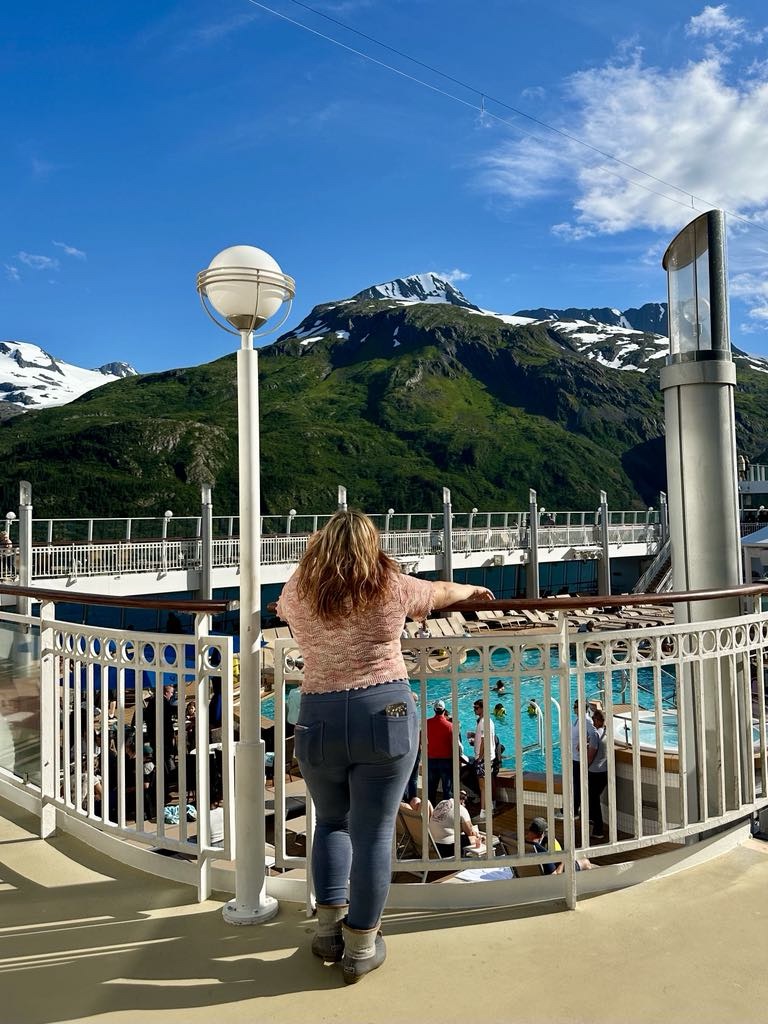
It marks eight years since my last cruise, I was eager to say the least. We set sail porting out of Whittier Alaska on 21 July 2025. My mother and I chose a late July Alaskan cruise due to learning it is one of the warmest timeframes to be in Alaska. Neither of us do well in the cold. 🥶 But I’ll admit it already felt great to get away from the scorching 115 degrees in the Mojave desert of CA.
Our first stop was to the Hubbard glacier, which is reported at 75 miles long and 6 miles wide! The ship cannot get too close, as it would be dangerous. We gazed at it from a few miles away, while the rich people went on a smaller boat to get a closer look ;-). I must have looked at it from every floor, and every angle.
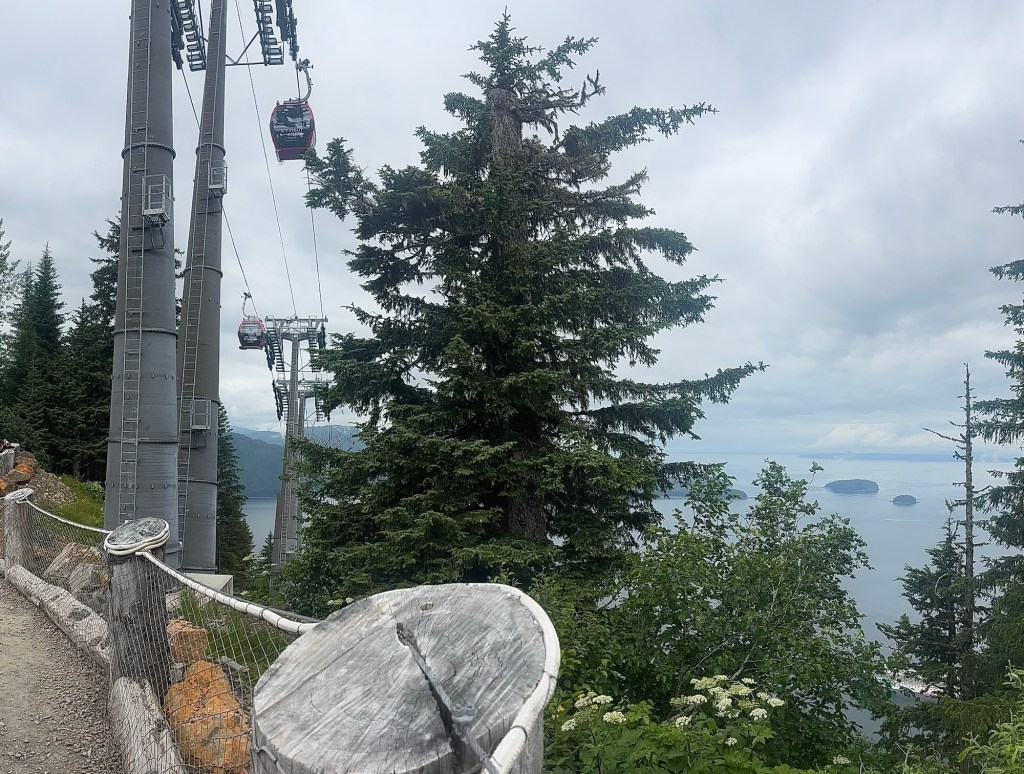
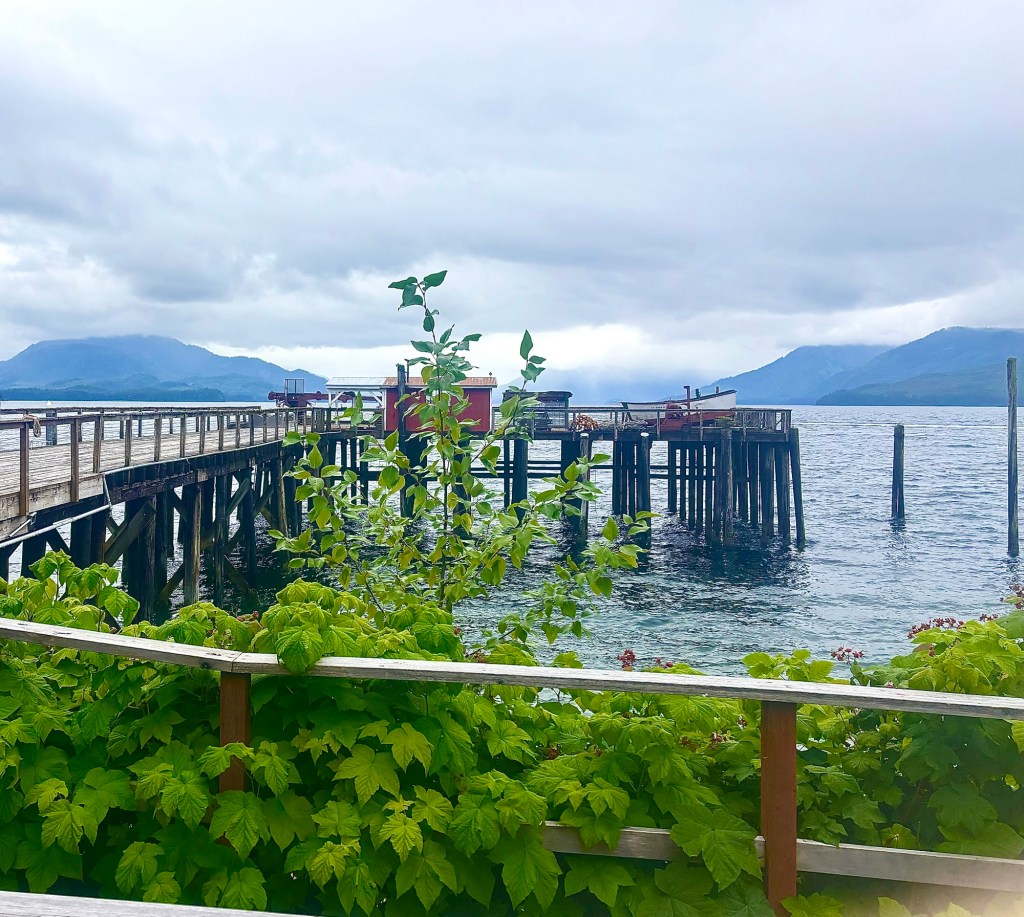
Stop number two was called Icy Strait point. It was cold, chilly and absolutely breathtaking. We were able to take gondola rides up high for amazing views, and also to the town to see the shops and the ocean up close. The nature was incredible! You will want to take pictures of everything you see.
Icy strait point pier 🥶It was a cold walk but well worth it for the views
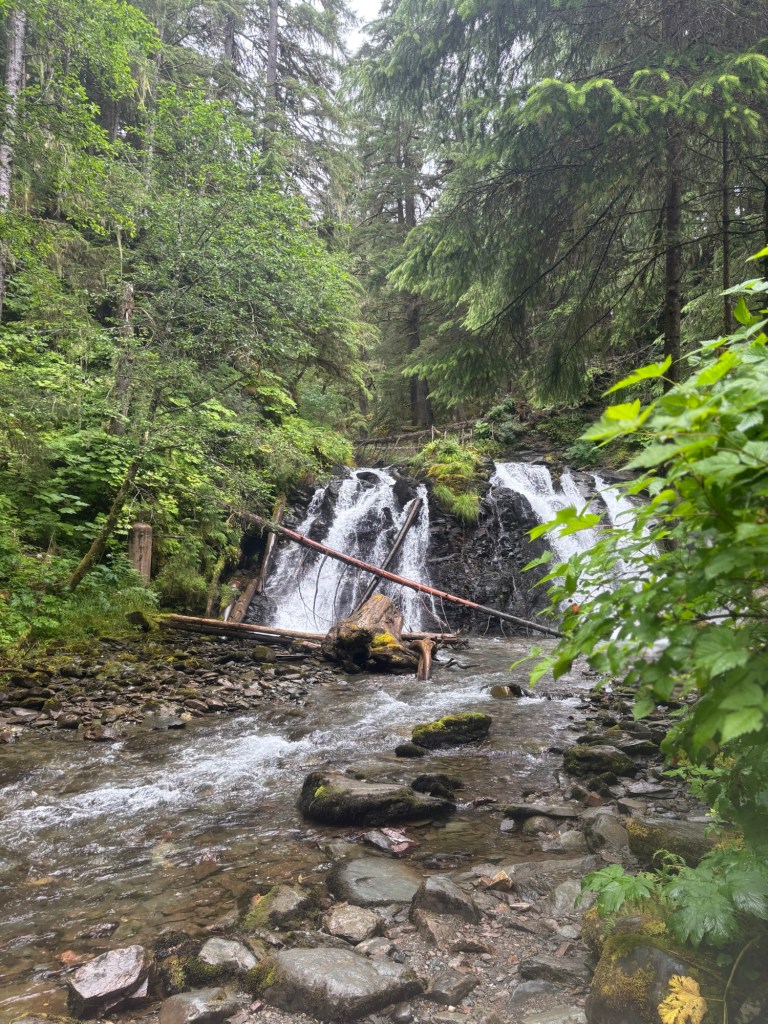
Stop number 3 was the Salmon bake excursion in Juneau, Alaska. This is the capital of the state. The salmon was fresh, the forest air was incredible. The waterfall was breathtaking. And the city shopping was a lot of fun.
Walking around the city of Juneau with an incredible Mountain View.
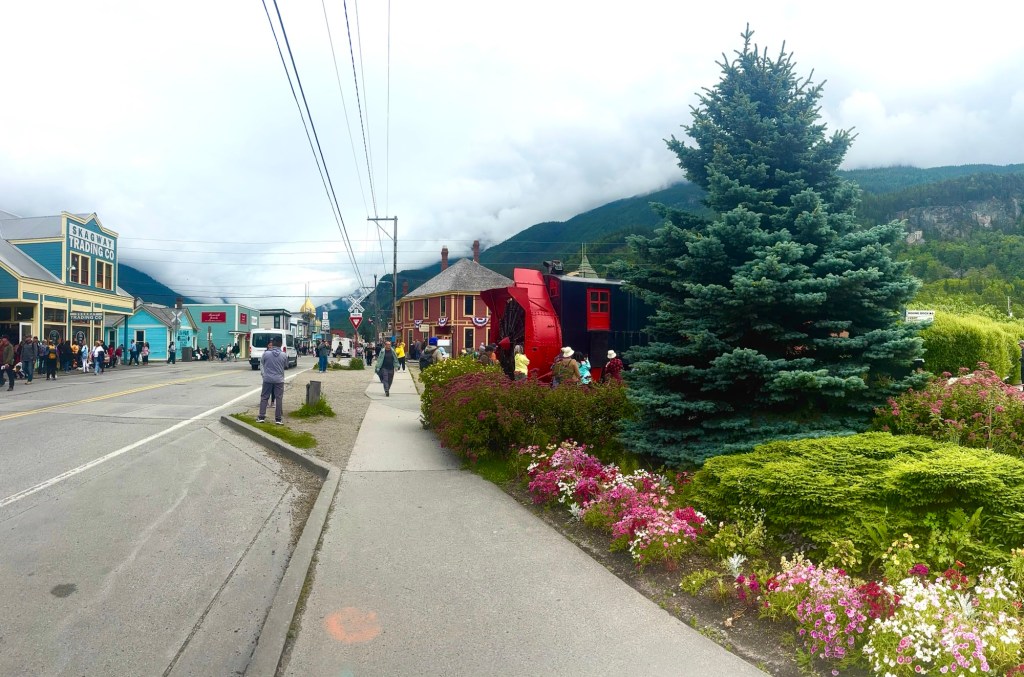
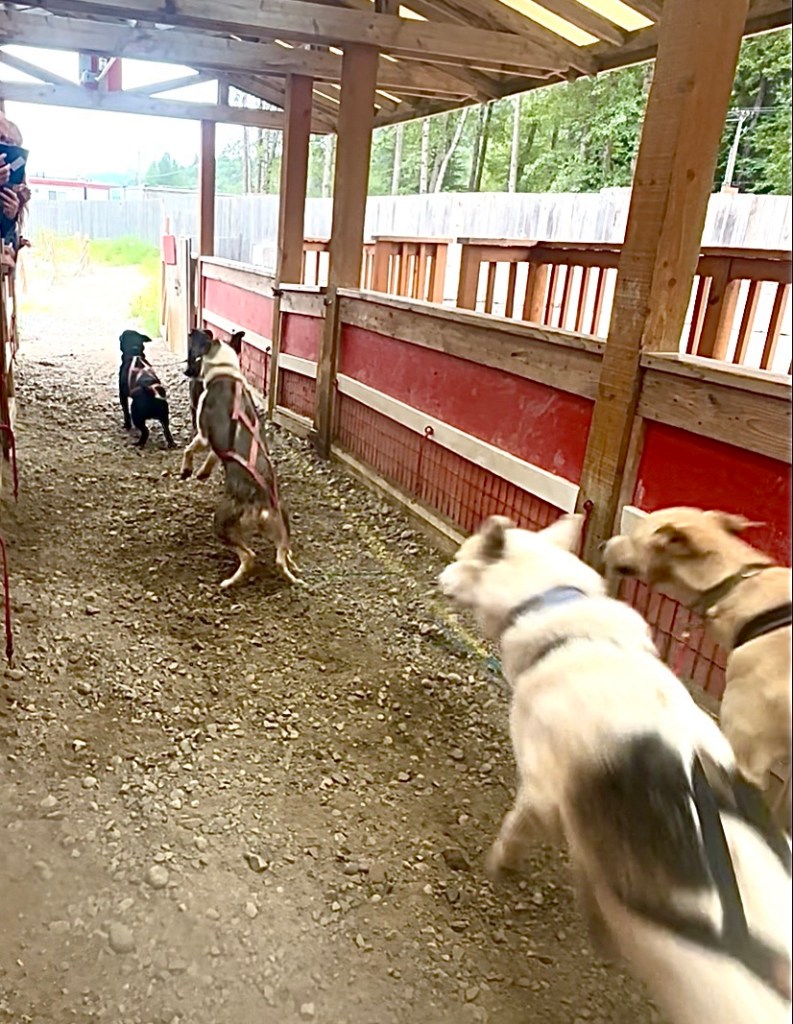
Stop number 4 was in Skagway! We picked an incredible excursion where we got to meet Alaskan sled dogs, take a bus detour to Canada, and explore the town & learn the history! We loved the nature, the puppies, and the classic small town feel.
Alaskan sled dogs taking off! Just another fun day in the office for them.
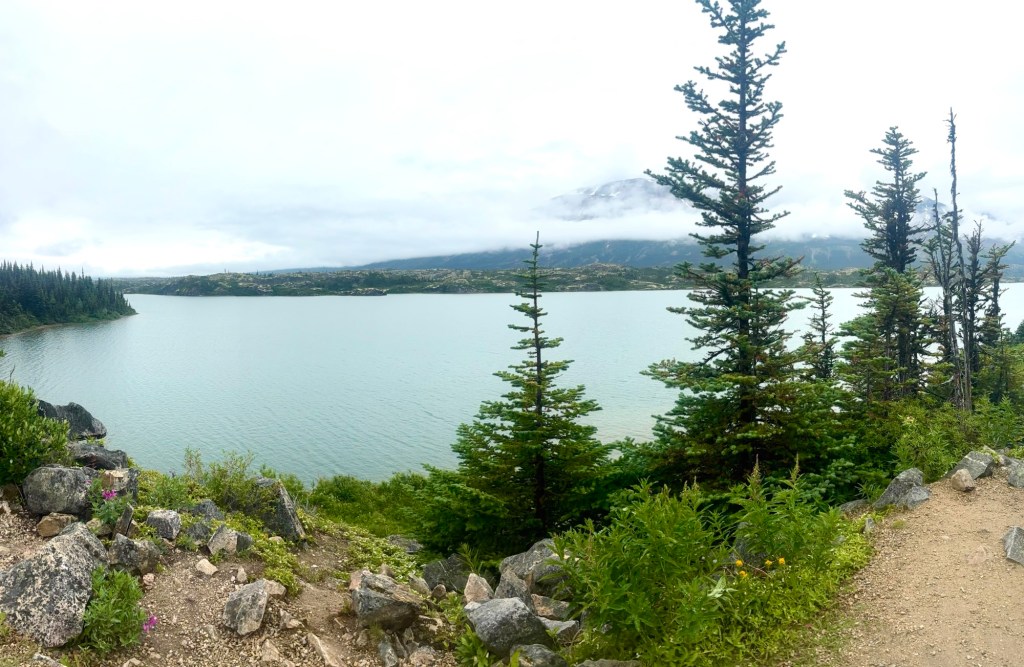
A lake somewhere in Canada …. with no reception and a lot of mosquitoes. 🦟 This was a quick but amazing unforgettable detour. But… we will be in Canada again when we port!
Ketchikan was our final stop in Alaska. We found out it’s the oldest city in Alaska, a fisherman’s town with the most salmon. There are almost twice as many bears as people. We chose to explore Potlock park for their totem pole displays, and walked through the town after.
A massive totem pole being worked on in the carvers room at the park. Our tour guide walked us through some of the native stories that originated through the creation of the poles.
We ported in Vancouver Canada! 🍁 We did a ton of walking, some shopping and eating around the city …. and …
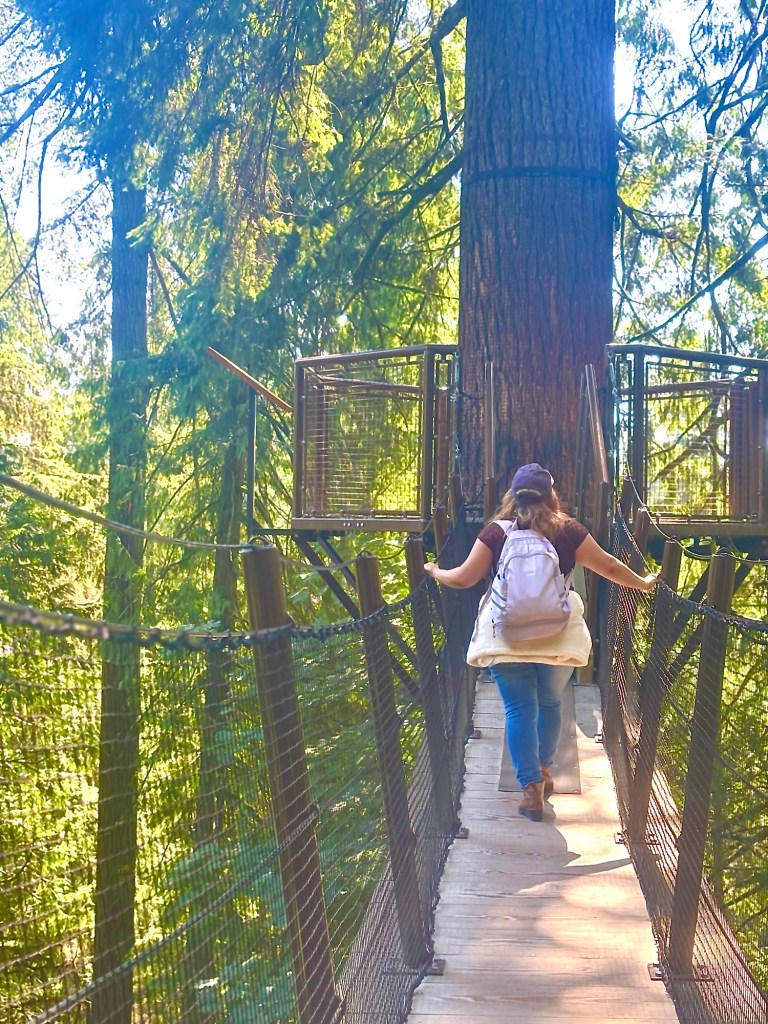
Even more walking at the capilano bridges in Vancouver island! The views on the suspension bridges & walk ways were incredible. My mom is terrified of heights, but she managed!

Spectrums

Elisa A. Escalante/ LCSW/ 06-30-2025

Do you recall any time in your life when the people around you gave you warnings of what to do or what not to do? Don’t do that too much, it could be a crutch. Don’t isolate too much, but also you don’t need to be around people all the time. You should really learn to be alone, sometimes. Don’t eat too much. Eat more. Be nice, but not too nice. Process your emotions. But do not obsess over emotions. Get out of your head sometimes. But don’t ignore things, communicate when things come up. Be careful not to tell everyone everything, some people will use it against you.

Humans are confused. I am too. Let’s just admit this first. I’ve worked in the mental health field for the past 17 years. People have both similarities and differences. People exist on many different spectrums. There are no two people that are 100% exactly alike. And, there are a lot less rules than we think. About how to act, exist, and love in this crazy world. However, I do like to discuss mental and holistic balance. No one will ever be perfect. But we can learn to be more balanced in our behaviors, mental loads and emotional processing. Let’s explore these spectrums. The balance between extremes.

Emotional Avoidance vs Rumination- On one end of the spectrum we have emotional avoidance and denial. This sounds like “I’m fine”, “nothing is wrong with me”, “everything is good”. People in denial about their issues, or maybe they just deny it outwardly to others. On the other end of the spectrum is rumination, where the person obsesses over their problems and cannot seem to let anything go. They replay it, talk about it, dream about it, it robs them of all joy. The health middle ground of this spectrum is known as ’emotional processing’. This is the ability to admit we have an emotion, process what it means’, and behave accordingly. Then we move on with our day and ground ourselves back to the moment.

Emotional Brain vs logical brain- The emotional brain is exactly what it sounds like. Our brain and body are capable of emotions. Our brain is also capable of logical thinking. These are located in different areas of the brain. Because they both exist, they are both important. Some people believe they should run away from the emotional brain and try to ‘only tap into logic’. These types of people are often explained as ‘not emotionally available’ and they tend to hurt those that are emotional. People that are too far into their emotional brains tend to be more sensitive and reactive. The healthy balance is the ability to pay attention to both. Every part of our brain is important. To suppress either logic or emotion is to suppress a natural part of what makes us human.

Self denial vs self indulgence- Self denial involves depriving ourselves of something because we view it as ‘bad’. Such as a certain type of food, a substance or a behavior that could cost us money or safety. Self indulgence is to binge on a drug or food in an excess amount that will cause us physical/ mental side effects. The healthy balance is a moderation of what we want. Just enough to either medicate or satisfy a desire without taking it too far. Because denying leads to deprivation, then obsession, then tension & cravings. And then, to indulge too much and too often is to be gluttonous or to risk addiction.

Doing mind vs Nothing to do mind- The doing mind is a mind that cannot rest or relax. It’s a mind that is constantly telling you what to do. Making to do lists, obligatory, obsessive. The ‘nothing to do mind’ has no motivation and wants to procrastinate. Both extremes lead to shame. If you always feel like there is something you must be doing, you will feel ashamed if you try to relax. If you procrastinate, you will be ashamed of your behaviors and your surroundings; as the surroundings remind you of your failure to get up and get it done. The middle ground is a balance of productivity and relaxation. Humans need both. We need movement. We need stimulation. We need to accomplish things. We also need idle time. We need to clear our heads. We need to rest our bodies.

The Fuck it’s vs Self punishment- The “Fuck it’s” is when the brain decides to give up on progress and go back to unhealthy habits because it just feels easier. Fuck it! I’ll never lose weight so I will just keep eating what I want. Fuck it! sobriety is so boring and miserable I might as well keep using (drug(s) of choice. Then Self punishment, on the opposite end, is when our relapse causes us to spiral into a mode of self hatred / punishment in order to ‘correct’ the harm that was done. “I ate a whole pizza, now I must run 7 miles and starve myself tomorrow!” Yes the balance is moderation. But if we relapse, the cognitive piece is to remind ourselves we are still on a health journey. We can be healthy again, even literally ten seconds after doing something unhealthy. We didn’t destroy our entire day, our entire week, our entire body, or our entire progress just because we had a slip up.

Desire for change vs Radical acceptance of the Moment- The desire for change is to want something other than what you have right now. While radical acceptance of the moment is to be completely okay and satisfied with your life, yourself, and those around you. If we always want change, we never appreciate or live in the moment. If we always accept things as they are, we will not work toward self improvement. The balance of this reminds me of one of my favorite quotes by Thomas Monson: Learn from the past, prepare for the future, live in the present. Obviously we won’t be able to do all of these things at the same time. Maybe we can do a little bit of each one, each day, at some point.