Final Out

Elisa A. Escalante/ LCSW/ 3-3-2022

“They will never get their lives back. Their parents will never get their kids back. And there are many more who will never get their limbs back. Many more who will never get their sanity back. You say that you will never forget… but you already have. –EaE/ LCSW/ OEF Veteran

            My psychiatric interview in early 2018: (I was already off of Active Duty for almost four years but still in the Air force reserves, and just 8 months into my career at the Brooklyn Vet Center)

Civilian psychiatrist:  “I don’t know, I mean I hear that you are saying you’re experiencing all of these symptoms… but you’re a pretty new therapist. Many new therapists think that they are taking on the same symptoms that their clients are, it’s just a lack of experience perhaps….”

My thoughts as I listened to this feedback: “Ummm… I’ve already told her about Afghanistan. And that my trauma therapy sessions with my clients were giving me intrusive thoughts back to my war experience, increased anxiety, increased hypersomnia, severe depression and difficulty with intimacy and socializing… how can she not connect the dots? This is chronic PTSD mixed with the secondary traumas of being a psychotherapist… but I’m the newbie… yea, okay.

          After painfully going through psych eval after psych eval, I was beginning to get hopeless. I reflected back on my time when I had just been released from Active Duty in the summer of 2014. Technically, there were some warning signs even way back then. Long walks, 2-3 hours a day in which I wanted to keep away from everyone, but it was never enough time by myself. Disconnect, numbness, agitation and avoidance. I became more obsessed with the gym, particularly martial arts, and I did not want to engage in anything else, to include conversations with people. My eating was getting out of control yet again, what else was new? I did love my college experience, that happened to be my saving grace and I cherished every moment of it since it was the most freedom I had ever experienced in my life.

      Back to 2018: I went from one failed relationship right into another relationship that had “Red Flags” written all over it, but I wanted to hope that I had found something ‘special’. I then began to obsessively self-medicate with things that shall remain nameless for now. These things were introduced to me by my new significant other, and we rushed through a tornado of a relationship full of drugs, trauma bonding, abuse and more. Somehow, it distracted me from my current traumas, but added on in the long run due to the domestic violence. I was getting financially and mentally drained while he fed me fairy tales, exploited my kindness and manipulated my thinking patterns.

     One silver lining: I became service connected for VA disability at a 30% rating for depression, hypersomnia and PTSD. This wasn’t much, but it was a start, and it led me to my decision to fully get out of the Air Force reserves. “What about retirement??” Many people asked as they could not fathom why I would serve 10 years, and not ‘suck it up’ and ‘just’ do another 10 to get a DoD pension. But, if they had to ask, then they simply did not understand. This was chronic mental illness, and although I was still highly unaware of just how deep and severe it was getting, I knew enough to know that I needed to call at ‘quits’ with the military.

       Someone in the past few years had recently made a Facebook post asking people for the TOP 3 Hardest things they had ever done. I made my list very matter of fact and concretely:

#3 Afghanistan deployment

#2 Step parenting (Alongside irresponsible & abusive biological parents, I might add)

# 1 Hardest and without a Doubt:  Being a Trauma Therapist (To be more specific, being a trauma therapist that already has PTSD)

       My receptionist could see the pain in my eyes early on in my career at the Vet center, he predicted I wouldn’t last two years. I lasted 3.5. When I think back on this time, struggling with trying to balance this career, the Air Force reserves as well as my own mental illnesses and trigger responses from my deployment, it’s hard to describe. I was beyond burnout. I was a zombie. Everything in me was drained due to my emotionally laborious job. After the work days, I was no longer present or functional. My coaches started calling me lazy due to my lethargic state, or getting on me for not being able to ‘concentrate’. My now ex was angry at me for being ‘lazy’ and unable to do much after work besides drug my mind away from reality. My friends started expressing concerns about my memory and lack of ‘presence’ even when I was around them. Apparently I was retelling stories over and over again, and unable to focus on what was being said.

       Technically, I believe I could have held on a little longer than 3.5 years, but the break up (In Jan of 2021) was the ‘straw that broke the camel’s back’ and led me to the decision to fully resign, move back to CA with my father and change up my entire life. This was one of the hardest decisions to make, because it required me to suck it up and admit I needed help. I honestly felt like I had no choice, as the mental shock of the break up along with my chronic trauma symptoms led me to a series of terrifying thoughts and events that put me on the VA suicide watch list for six months, and eventually, a 70% disability rating (with the addition of binge eating disorder added to the mix).

     Everything I have done since moving back to CA in Feb 2021 has been about healing, processing, finding a proper and healthy medication regiment, and creating the boundaries that I so desperately needed since I was a child. I know, that in order to not go back to that dangerous mental state, everything has to be changed for the better, and maintained. People tend to want to run away and avoid their mental health concerns. They want to push it to the back burner, I was no different. It feels like the ‘right’ thing to do, until it builds up and comes crumbling down on you in a way that gives you no more options. Get better and learn to live, or keep dying a slow and painful death. Death is guaranteed, but our struggles in life vastly depend on whether or not we are willing to prioritize our wellbeing. For some people, this actually means they must change everything. I had to change my residence, my relationship status, and my career, all within months.

      Conclusion:

       My final out as well as my transition into the civilian sector has been plagued with mental illness and transitional stressors. I will never lie about that, nor am I ashamed of admitting my mental illnesses. They are an imprint, they are not my fault. I monitor myself every day, I act with intent and purpose. I find reason for every thought and every emotion. I am mindful, I am even a bit spiritual at times. I am grateful that I had the ability to find out all that was harming me, remove it, and replace it all with something better. I am reformed, maybe one day, I’ll even be able to thrive. If I could go back in time, I would have spent more time after the military looking for mentors as well as more positive ways to take care of myself. I would have especially worked on my sense of self-worth.

     The military has a way of robbing some of us of our identities and our sense of self. This can take a lifetime to get back… assuming we ever had it to begin with. I see now very neutrally and clearly that I was indoctrinated into a world that prioritized mission above self, and that taught us to be sacrificial. They taught us that boundaries do not exist, and that our ability to be highly functioning while in horrible situations is something to be ‘proud of’. This, along with my childhood trauma, led me into an increased pattern of self-destructiveness. I am faced with the daily task of undoing these thought patterns and habits little by little, but every painful step of the way, it gets easier. And then, my mind feels lighter.

Homecoming

Elisa A. Escalante/ LCSW/ 2-22-2022

I returned home from Afghanistan in January of 2013. Immediately after I got off the airplane and into the airport waiting area, I saw my long-term boyfriend of 5 years, there to greet me. My eyes brightened as we went toward each other for a hug. Unfortunately, my mood took a plunge as I noticed my Commander (A Lt Colonel) intercepted us to shake my hand first. ‘This woman is really going to ruin my magical return home moment??!’ I thought to myself as I reluctantly shook her hand. She welcomed me home like a true Officer/ Commander that does not give a shit… but has to be there, and would rather be sleeping in. After our handshake and fake conversation, I went to my boyfriend for the hug as she stared awkwardly at us. I did not kiss for very long, as it is ‘frowned upon’ to show PDA while in military uniform. (sigh….)

      About 2 weeks after home coming, I went to the local pet store near my base in Abilene, Texas. Through this town ran a railroad with a very active train service. As I was unlocking my car door to go home, the train conductor blared the horn full blast. I uncontrollably jumped into my car to hide. I immediately felt adrenaline and shakiness course through my body, and I cried for what felt like, no reason at all. Although I did find this situation odd (I had never struggled with anxiety), I put it behind me rather quickly. Fast forward through the months, I got the occasional nightmare. These nightmares often included fighter helicopters or jets flying above and bombing my immediate surroundings. I figured, “Hey this is normal, it’s acute. It is going to happen sometimes. I did just come home, after all…”

     When I returned to work at the mental health clinic stateside, I found my mind wandering more than usual. I also experienced more negative and pessimistic cognitions and attitudes toward my typical duty day. “Now Team, this is an important matter…. We need to make sure we are not using the color printer too much. Use the black ink and cut down on costs…” My Flight chief lectured us in one of the regular morning meetings. I stared at her blankly as I wondered in my mind: ‘Why the fuck is this important exactly? It’s…. ink.  Ink!!! Who gives a shit about ink?! There are people dying in the world…’ This was just one example of how I could not take the stateside military world seriously anymore.

      My fellow enlisted coworkers tried to lecture me the way they had before I deployed. “Your pockets are unbuttoned Escalante…” they said. (Military regulations require us to keep them buttoned at all times when not in use) “I know”, I retorted back. They stared at me shockingly: “So… you’re just not going to button them?” They asked.  Me: “Nope”. (In a combat zone, we did not care about such insignificant things.) I also made the executive decision to remove every single one of my coworkers off of my Facebook. They did not take lightly to this new form of boundaries/ isolation. They confronted me about this, including my supervisor. My reply: “It is not in my job description to be your Facebook friend.” I went back to work. I stopped hanging out with them, I stopped messaging them between shifts. I may have been a bitch in their eyes. I did not care. They mocked me while I was deployed. They acted like they were busier, and I was ‘lucky’. They pressured/ harassed me to travel all the way from my FOB to Bagram to do CPR in a warzone, so they could ‘meet numbers’ back home. (If I had gotten killed on that unnecessary 45-minute Helo ride…, would it have been worth it? Those numbers?) They also pressured me to reenlist, and when I chose not to, disowned me for my decision to pursue honorable separation. (Haters!!!!)

     Besides my anger, which I mostly kept under wraps, I had bigger issues. I did start to notice acute trauma symptoms, as well as heightened depression and an influx of new eating disordered patterns. However, I worked in the mental health field. I already knew what these mental diagnosis could potentially cost me: my entire career. So, I had to be an actor, and it was a lot trickier than it would be for the average military member. Why? I was surrounded by mental health professionals, every single day. When I say I deserve an Oscar for my performance, I truly mean it. In that last year and a half on my military contract, I had many social workers and psychologists complimenting me on my ‘ability to bounce back’ after a deployment to a combat zone. One social worker even mentioned that I was the only military member he had ever seen that “did not change one bit”.

      I did have one thing to look forward to: NCO (Noncommissioned officer) of the year! I had made/ pinned on SSgt (E-5) while deployed. And, surely while I was away, my flight chief had put me up for NCO of the year. (Or so I assumed) I did deploy, after all, and I took her place on this deployment. (The formal orders to Afghanistan were actually for her, but she got out of it) I had the utmost confidence that she had put in an award package for me. Imagine my surprise at the award ceremony, when I saw her name get announced for NCO of the year, and saw her go up and take the award as if she had deserved it. (The look of surprise on my face had to have mimicked that scene in Horrible Bosses! Ha!) Then, imagine my shock, six months later, when I found out she had also put herself up for Mental health NCO of the year, and somehow ‘earned’ that too. This lady was a professional at writing bullshit award packages for herself, while everyone else did real work. I was boiling inside but had to keep my mouth shut… for … forever.  

      There was no formal recognition for me at all. My Afghanistan campaign medal was never formally given to me in any type of ceremony. It was thrown on top of a filing cabinet while a busy officer talked over her shoulder and told me to grab it and go. (While I was traveling through Bagram on my way back home) My Air Force commendation medal was never formally given to me, it was mailed to me after my final out. When I was done with the military, I was done. I had bent over backwards for both my chain of command, as well as my patients. And all I received was one ridiculous informal patient complaint at the end of my six-year career, on my way out the door. My chain of command ‘milked me to the bone’ up until my separation date. I barely had time to do my formal separation! I barely had time to pack my belongings in preparation to drive to Dallas and fly TF out of Texas. This was my personal homecoming story. For the next blog, I’ll discuss my FINAL OUT, and my personal transition story from the military to civilian life.

In War

Elisa A. Escalante/ LCSW/ 2-17-2022

“Everyone dies here in some way. Some get killed by the enemy, others kill themselves, and others die in the sense that when they go back home, they will never be the same again. That person they used to be, has died.  Everyone here is reborn. Some through a grave and tomb, some with a Memorial in their honor, some are reborn into a new person. They may hate their new self or they may love it. But either way, that rebirth will stay with them until the day they die again.” -EaE

       Sunday was my one day to sleep in. But not on this particular Sunday, in December of 2012. I was woken up by a loud and shaky BOOM!  I was slightly startled, but I laid completely still. I already knew it was an attack. I always knew the difference btween training explosions and explosions from enemy combatants… call it instincts, I do not know why. Since I worked in the combat stress clinic as a mental health technician, I was considered a “Non-Combatant”, and was given specific instructions to stay I n a hardened facility when under attack. I happened to live in the same dorm hall as my social worker counterpart. The other female mental health tech did not want to be alone, so she ran to our hall to hang out with us. Curiosity got the best of them, they kept the door open to watch how this battle would play out. Curiosity also got the better of me, as I decided to join them.

     A second VBIED (vehicle Borne Improvised explosive device) hit the barrier of our FOB (forward operating base) and sent a strong gust of wind into the hall along with a loud bang. After which, I looked outside. The scene: Several Apache Helicopters floating above from about ½ a mile away shooting down at the enemy. There was too much obstructing the view, which was a blessing in disguise because, why see killing if you do not have to? Then a few minutes later an F-16 jet also hovering above, shooting more at the targets. (Once upon a time I watched these jets at Air shows with my family, they were my favorite) I distinctly remember thinking in that moment: (This is like what I’ve seen in movies, but, this is my life right now. Right in front of my very eyes.) I felt nothing at the time, I just saw it, and I had thoughts. No emotions yet.

      I then noticed my colleagues solemnly looking toward the left of our building. “He’s dead”, the social worker mumbled to the other technician. I leaned forward and peaked my head out of our hall, to see what they were seeing. The scene: An Afghan civilian dead, laying on a litter, with tarp covering the majority of his body. Another Afghan civilian standing right over him, sobbing. And right behind the sobbing Afghan civilian, a U.S. soldier with his hand on his back in comfort. I saw this, the mental image became ingrained, but no thoughts yet, and no emotions. The fire fight lasted for about 90 minutes until all enemy combatants were killed, and then, damage control.

       This was not our only attack while I was deployed. But typically they came in what I called “onesies” and “twosies” of mortar rounds that would randomly shoot toward the direction of our base, sometimes not breaching the barrier, but sometimes landing right in the middle. My social work colleague once joked: “Just when I forget I’m in a war zone, they send us these little explosive presents just to remind me of exactly where we are at!” I remember the first big attack that included 9 mortars. Where I went from working out in the gym to being crushed in between two large cinder blocks by many people as the explosions seemed to get closer and closer.

      What do we really learn in war? It all depends on who you ask? We all have different experiences. For me personally, I learned that I have more physiological anxiety symptoms when I engage in public speaking vs when bombs are crashing near me, even when they’re meant to kill me. With this danger, somehow I numbed out and became shockingly logical. I learned that when I’m near death, sometimes I get a case of the “fuck it’s and engage in some pretty careless behaviors. I learned that Helicopter rides in the midst of war are terrifying, and yet oddly exhilarating all at the same time. I learned that I did appreciate living in my country after all, because I witnessed a country with citizens suffering from extreme poverty and constant war violence on the regular. I learned that even when a bomb hits from a quarter mile away, I can feel it in the pit of my stomach, I can feel the shaking of my organs. I learned all about the feelings of helplessness, hopelessness, suicidality and homicidality that my clients suffered through. I learned and heard all about the gory details of suicide bombings, fire fights, convoy dangers, ambushes and more. We saved people, we also lost people. I learned what it felt like to lose a client to suicide just hours after I last spoke to him. And, to see his coffin/ flag get carried onto a C-17 while something inside of me broke. (A deep moral injury in the making)

       I learned that, unfortunately, as close as you would love to remain to those that you had deployed with, in most cases, they will disconnect from you. As you are a reminder of a trauma that they do not dare revisit. I learned that whatever personal shit your deployed coworkers are going through, they are very likely to project it onto the easiest target: Me at the time. I cannot truly say that I had support in war or going home. (Except for a very rare few gems in my life) I learned that most people forget about you. They may forget you are there, they may not care to send anything, they may find it an all-around taboo topic. They might even be more terrified of hearing about the stories than you are of seeing it in the flesh! I learned that many of my coworkers stateside were growing resentful and jealous of what they considered a possible ‘vacation’ from the ever demanding work back home. I learned that I really trusted no one completely, I learned that I had a lot of anger after all.

     I’ve never opened up about my warzone in the majority of my writings. But this is a 3 part series I am planning on doing with my blog, at last. The next two will be called: Homecoming (About what happened right after I came back home from Afghanistan, but had time left on my military contract), and then Final out (After I was released from Active Duty and transitioned to the civilian sector). Stay tuned.

What was I Thinking??

Elisa A. Escalante/ LCSW/ 2-9-2022

“My time, my freedom, and my peace of mind. No one will take these away from me again.” -EaE

There is not a human alive that has NOT had those moments where they reflected back and wondered: “What in the world was I thinking?”  Sometimes, we do things that feel so out of character, so against our very own instincts. Sometimes during these acts, we question ourselves, but continue to commit to questionable projects and relationships. It can even become a vicious cycle for years. Years and years of acting more than thinking things through, making compulsive decisions off of emotions and throwing logic out the window. Trying tirelessly to fight for things and fight our own instincts, only to fall short. But, it turned into a disaster. It wasn’t working out, it rarely felt right, and maybe it went against our values or our morals. It was a situation we never imagined we would be in, it felt desperate and chaotic. Many will sum it up to ‘character development’ and urge you to move on and move forward. Yet, you’re stuck now. With regret, and shame, and an endless amount of questions for yourself. The worst part? It’s hard to find the answers.

     As hard as it is to admit, even in the situations we regret the most, there was a part of it that we wanted. We were willing to put up with the bad things to get whatever it was that tempted us in the first place. We found reward in even the most horrendous situations that stressed us to the max. The slivers of reward was exactly what we were after. Then in turn, we stopped thinking much about the consequences, and put all focus on the reward. Many people in related situations will lose all sense of how they are hurting themselves in the long run. This could be eating junk food every day, taking in a harmful substance, being in an abusive relationship, compulsive behaviors in places like: your job, the gym, the casino, strip clubs etc. Humans are often willing to suffer for highs, lows, a sense of purpose/ meaning, approval/affection and so on. But sometimes, it does get dangerous.

      I found myself in the worst relationship of my life from late 2017 – early 2021. I became the primary financial provider, I step parented and helped provide for his child, I endured verbal abuse, I ignored red flags, I forgave him even when I caught him in lies. All to be cheated on and left for someone we were both ‘friends’ with. Shortly after the break up, I needed to promote my first book, so I downloaded and used the Clubhouse app and engaged in many audio chats. Sometimes, it became my therapy. My most meaningful clubhouse was speaking with a woman who survived a horrible divorce in which she was left for someone else. During the chat the listeners allowed me to open up in a way I never had. I admitted that the hardest thing about moving on was the rage I felt. I accepted it was the end. I accepted he was no good for me and that I was (am) better off, hell I even celebrated it! But, I could not let go of the rage. The rage of pouring my heart, soul and effort into another human being who ended up abusing and betraying me. Forgiveness will never be an option.

       The most important thing they could stress to me was how I needed to care about myself more than him. And to translate this onto every reader in regard to all situations we regret (whether it involves another person or not), this is what we need. We need to care about ourselves enough to heal. We need to care about ourselves enough to engage in proper self-care vs the self-destructiveness that we may be accustomed to. We need to care about ourselves enough to process everything and also allow ourselves new experiences, more joy. No one, (especially not the worst ex of my life) is going to alleviate the regret. No one will be able to answer all of the questions. And of course, there is no time machine to go back and do it all over. We are often times, left with our mistakes and regrets, and it’s very hard to process when we are in the midst of so many emotions.

        The questions and comments to yourself may get overwhelming:  What was I thinking? Why did I do that? I knew better. Can I trust anyone else? Can I trust myself? It wasn’t worth it. What are people thinking about me? I’m embarrassed. I deserved better. Or… maybe I deserved exactly what I got?  What was really going on behind closed doors? What did people hide from me? What did I hide from myself? Will I do this again? Do I even know what I’m doing anymore? I thought I had it all figured out…

         The questions and comments from outside observers may get frustrating:    What were you thinking? You knew what you were doing…. Why did you ignore the red flags? You should have known better. It’s your fault. Just learn from this. You will do better next time. Just stop doing it. Why can’t you just change? It was meant to be. It could have been worse. Why would you even think that would work out well? Just do it differently next time. You dodged a bullet, you’re lucky in the end.

      Hiding:  Regret gets swept under the rug quite a bit. When huge life mistakes are made, people tend to go into hiding. While everyone around them point’s fingers and judges. I can’t really blame anyone for this tactic. The unfortunate thing about all of this is that mistakes and regrets are a very normal part of being human, yet we get wrapped up in perfectionism and forget this very thing. We cave to the pressures and expectations thrust upon us, and then when we fall short, we have an existential crisis so to speak. Hopefully, in the future we can normalize these “What was I thinking” experiences. Hopefully, we can talk about them more. Hopefully it will lead us to seek out better mentorship.

     Attention Seeking:    Another option at our disposal, is attention seeking. This could look like blasting our dirty laundry on social media, or telling all of our friends about the personal details of what happened and why. This could validate our feelings on one hand, but the risk is that we are more likely to get judged and blamed. The deeper issue? Regardless of how people respond, it does not heal you per say. Much more work needs to be done, and this includes the necessary and vital inner work we must have with ourselves. Attention seeking that gets consistently validated may bring with it the risk of someone remaining in cognitive dissonance about their situation.

     Learning:  Both hiding and attention seeking can be tempting, but neither of those options spare us from the objective of learning from our past. The hardest thing about learning from our past regrets, is developing the ability to distinguish between what was NOT our fault, and what we must hold ourselves accountable for. And, let’s just be honest… when we are hurting, it’s hard to take accountability for anything at all. He (my ex) was abusive, he was wrong. He manipulated me and took advantage of my kind nature. And, this isn’t about letting other people off the hook, this is about owning what is in our control. So, what can I be accountable for? Especially when I’m NOT the abuser? I allowed him into my life despite my better instincts. I traded my safety and wellbeing for perceived ‘fun’ and adventure without proper vetting. I fell for the lies even when there was concrete proof they were in fact lies. I did not create the boundaries I deserved. I forgot to take care of myself, I betrayed myself. I engaged in way too many self-destructive behaviors both during the toxic relationship and afterwards in the healing process. It was messy. I can’t count on others to NOT betray me, but I should always be able to count on myself to not betray me. There is a lesson in even the most painful experiences, and if we do not slow down, we may not find it.

Concluding Questions:

  • Why was it harmful?
  • What about it reeled me in?
  • What/ who should I avoid?
  • What did I learn?
  • Can I change the outcome next time?
  • Can I put my health first?
  • Am I healing? What does this look like?
  • What was I thinking?? (Process it)

Mental health Mixed Messages

Elisa A. Escalante/ LCSW/ 2-03-2022

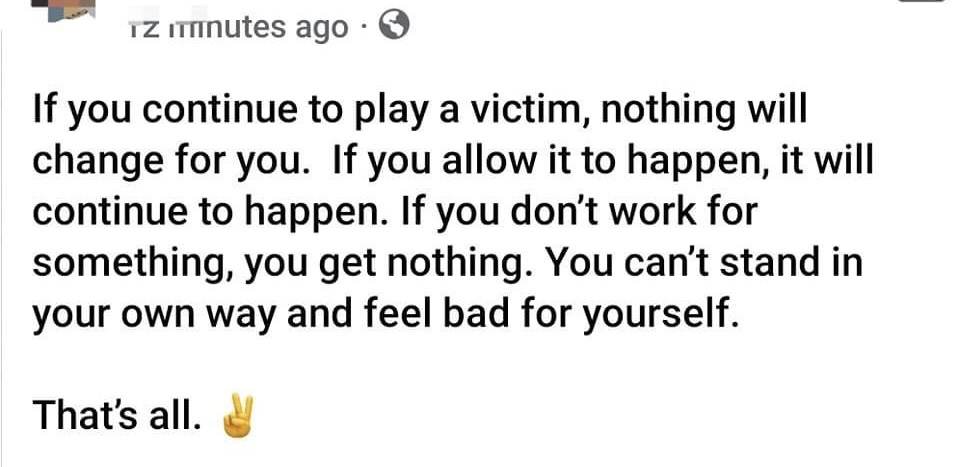
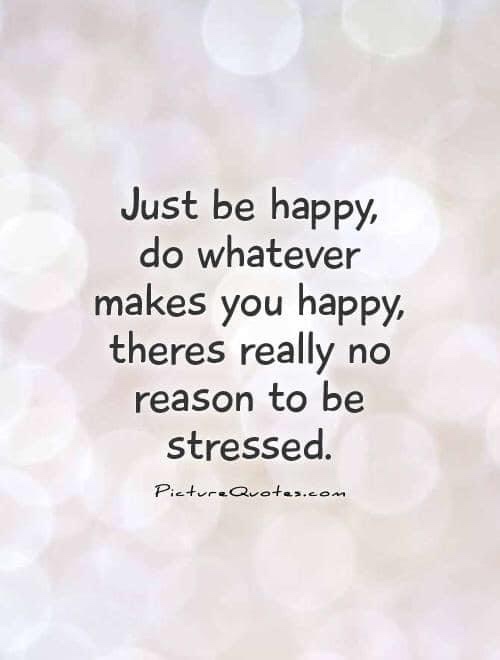
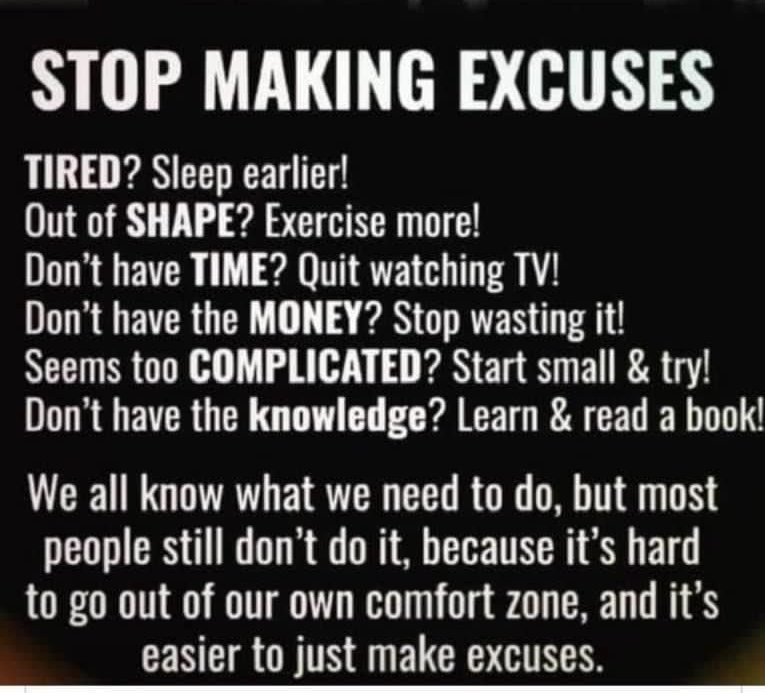
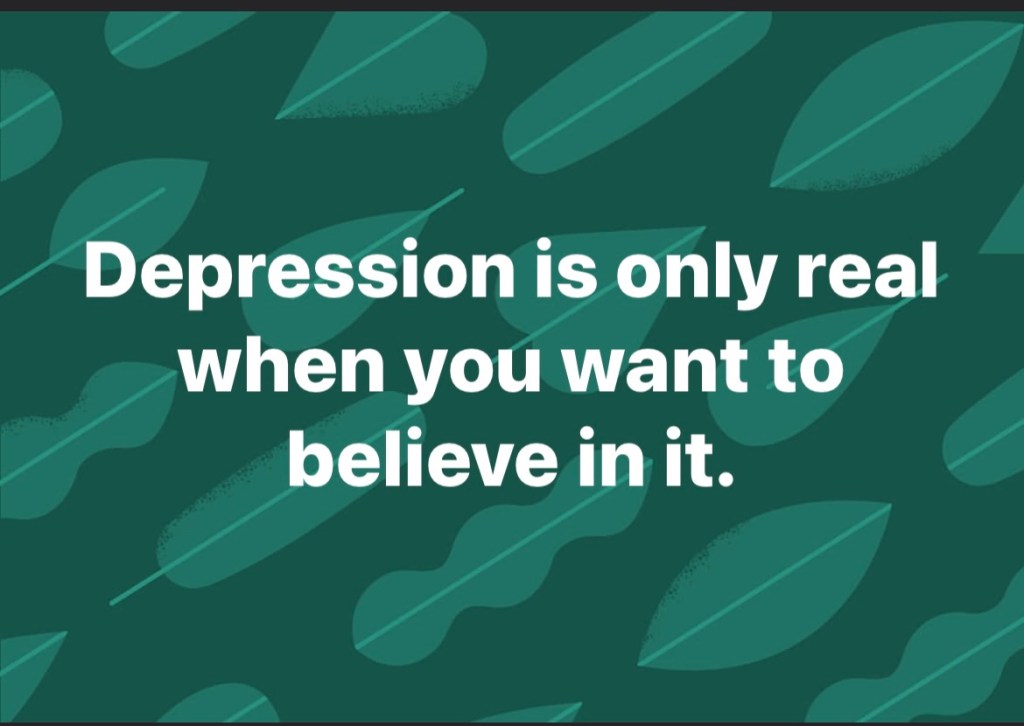
Have you ever scrolled through a social media platform and read a quote about mental health that not only caused confusion and mixed messages, but also an endless series of arguments between people in the comment threads? Mental health is NOW a hot topic. Ironically, for the longest period of time, it wasn’t a topic at all due to lack of information and stigma. Now that it is hot topic, there are many different views on what it means to be ‘mentally ill’, how to ‘heal’, how to ‘grieve’, how to work toward sobriety, how to address your body as well as your relationship with food etc. There are not only therapists all over the country with many different specialties, but it seems social media has created a phenomenon of ‘mental health influencers’ and ‘life coach’ gurus who claim to be able to help people ‘turn their lives around’. There are also sporadic individuals that have figured out the perfect formula for their life and mental health, and therefore may try to shove that formula down other people’s throats with insistence and urgency, because… “It works!” For this blog, I am going to share some of these ‘mixed messages’, how they get perceived, and also my clinical/personal impressions on how to take these messages in a more practical way.

Body Positivity

The Common expressions:       “Be yourself”         “Love yourself”       “Your body, your choice”   “Size isn’t everything”

The Common arguments:      “Stop promoting obesity”    “Being fat is nothing to be proud of”    

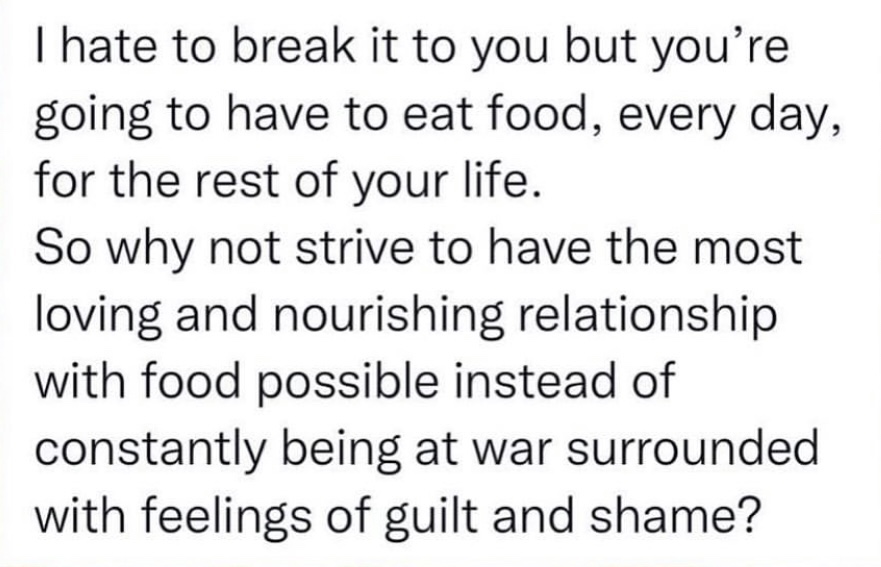
The Clinical perspective:  Admittedly, I have a food addiction and an eating disorder, so I am able to offer a deeper perspective here. The body positivity movement was NOT created to promote or encourage obesity, but rather to reduce the shame of those that suffer from eating disorders. It is known clinically that when we reduce shame, sufferers are less likely to engage in restricting and binge cycles and get back to what we call ‘regular eating’. This is safer! Eating disorders are in large part, a societally induced mental illness. It’s a phenomenon created by a world of seeing ads, pictures, and social profiles with exaggerated and unrealistic bodies faces. And then, in turn, following strict regiments to look like the illusions we see, and pressuring our peers and family to do the same. So in turn, we are reversing this mistake we made for decades, and pushing out NEW visuals and models that are more realistic and healthy for our youth.

Managing Depression

The Common expressions:     “Exercise”       “Diet”       “Get sunlight”     “There are people that have it worse than you”

The Common arguments:      “I’m drained no matter what I do”        “What’s the point?”       “Nothing works”           “Nothing will help”

The Clinical perspective:     I will always say, without a doubt, depression is a serious killer. Most people could not imagine, but it is deceivingly one of the hardest things someone can suffer through on a daily basis. And most depression sufferers could only dream that the solution was as simple as diet, exercise, sunlight and gratitude. Don’t get me wrong, the above list will certainly give temporarily relief/ endorphins, but it will not permanently take away that chemical imbalance that causes major/ chronic depression. Hence, why do depression sufferers argue with people spewing health advice at them all day? Because they have literally tried it all, to the point of exhausting their already exhausted brains and bodies, and…. the depression is still there. Therapy would be more practical advice, as well as stressing the importance of a healthy and understanding support system.  After all, it is a long and tedious journey that is heavily misunderstood.

Don’t Do Drugs

The Common expressions:      “Quit now!”       “Stay sober”      “Think of your family/ kids”       “This will lead to worse drugs”

The Common arguments:     “Freedom of choice”     “I’m going to die anyways”     “I cannot function unless I take this” 

The Clinical perspective: Could this get any more confusing? First of all, there are drugs that are legal, drugs that are illegal, and drugs that are prescribed and in a major gray area of legal/ or illegal depending on if a doctor deemed it “okay for you”.  It’s no wonder there is so much conflicting information regarding self-medicating, substance abuse, and addiction. My advice? Stop assuming there is a one size fit’s all when it comes to substances, sobriety and/ or harm reduction techniques. Drug’s, or better yet, “medicating” is all about the ‘cost-benefit analyses’. Meaning, is what I’m getting from this substance worth it? Do the benefits outweigh the cost? (AKA symptoms) Guess what? This is a question that can only honestly be answered by the individual themselves. The main reason there are so many fear tactics shoved down our throats when it comes to substances is due to lack of education and a fear of the unknown.

Marital Concerns

The Common expressions:     “Marriage should be forever, no matter what”        “They will be happier once they tie the knot”       “You need to marry and settle down”

The Common arguments:    “It’s not worth fighting for if it’s abusive”     “It’s outdated”   

“I don’t need to sign a paper to prove my commitment”

The Clinical perspective:    The tradition of marriage isn’t going anywhere anytime soon, but the outlook on it has shifted dramatically. This has caused a clash between what we normally call ‘old fashioned’ values and ‘modern values’. In this modern age, there has been role and identity confusion with all sexes/ genders regarding what ‘their place is’ in marriage. Also, the question of ‘is this even a tradition I want to partake in?’ Much like my perspective with substances, there is no “one size fits all” with marriage and marital problems. Two or more people may come together and create a “Verbal” contract of what they want/ expect in their relationship(s). This contract may or may not fit the ‘social norm.’ This contract may be rewritten, or torn up completely, or it may become legal and written in ‘stone’. Then, it may also get torn up and shredded still. How do we know when it’s beneficial? Or the right fit? We don’t, not in the long run. What’s best is that everyone strive for happiness and learn to pick something that works for their unique and personal wants/ needs. Relationship’s, break ups, marriages and divorces are often times trial and error over the course of time.

Stoicism vs Emotions

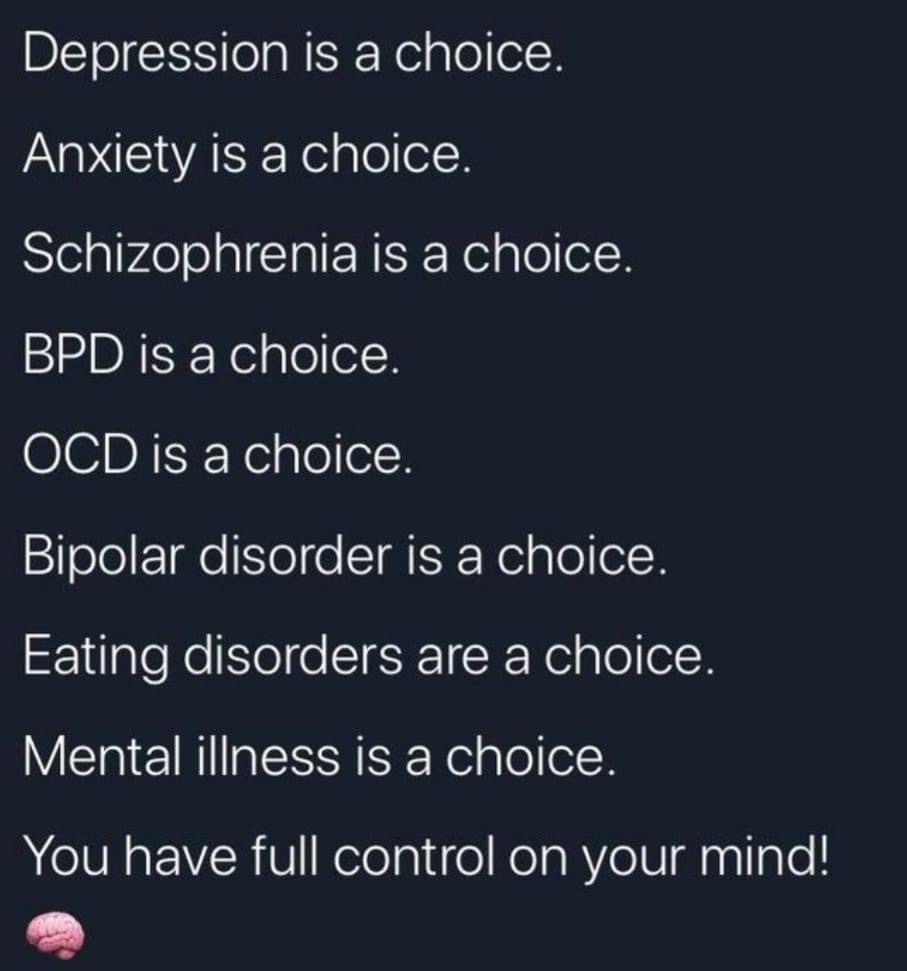
The Common expressions:   “Logic over emotion always!”       “Emotions aren’t helpful”       “You have to practice control over your mind”   

The Common arguments:      “Not processing emotions is harmful”         “You’re being dismissive”          “That’s insensitive and not helpful”

The Clinical perspective:      The truth lies somewhere in the middle. Humans have brains that are capable of logical thinking as well as experiencing emotions. There is a time and place for both. Emotions tell us crucial things, that if we ignore, will fall wayside and cause us to suffer more. Then, logic is helpful for being calculated, and if we never use this part of our brains, we may find ourselves stagnant.  If someone happens to be a “Stoic” that is under the impression it means: ‘never show emotion’ and ‘never feel emotion’, they were terribly misled. There will be a higher risk of burnout and heavy mental health symptoms down the road due to emotional suppression. If someone allows their emotions to cause behaviors that overtake their lives and lead to serious consequences, they need help with emotional regulation. They should also reflect on whether or not their external environment is a causal factor as well. We do not want to ruminate and dwell forever, but we also do not want to avoid and live in denial. The balance lies somewhere in the middle of this spectrum.

Fighting & Fawning for Love

Elisa A. Escalante/ LCSW/ 1-28-2022

“The highs, the greatest of highs.

The lows, the darkest of lows,

Feeling rainbows and butterflies,

the pain of fear, and lost control…

You love me? I know, I think so…

I’m not worthy? I guess not…

they love us, it’s all for show…

they hurt us, but won’t get caught.

You’re screaming, but I’m too blame?

Throwing things, but my fault?

It all feels… too insane…

I yell back, and then I’m wrong?

Losing track of how it began,

no sense in all past choices,

I should have kissed and ran,

but got trapped in, promising voices.

Chewed me up, and spit me out,

This rage… too indescribable.

Why did I not trust the doubts?

This end… was so damn probable.”

     I believe that one of the more common perceptions society clings to, is that everyone is properly and unconditionally loved and nurtured. Perhaps, not a true perception, rather simply wishful thinking on everyone’s part. A mother’s love…. A father’s love. It’s ‘supposed’ to be natural, reinforced and ongoing. What we should remember, is that not everyone is loved in this way. And, how we are loved and cared for has everything to do with how we choose and maintain our relationships in adulthood. For example, there is a huge difference between the behavioral developments of a child that gets loved unconditionally, vs a child that has to fight or fawn for love, and vs a child that gets no love at all.

       Healthy love, is in fact, a requirement for healthy development. Someone that is loved unconditionally without a million strings attached will be able to develop a very important thing for the human psyche: Self Worth. A parent or guardians’ healthy love will teach a child that they are worthy of healthy love. It will be an example that the child carries with them forever, even into adulthood. This particular adult will be able to spot terrible treatment immediately, and why? Because they were treated properly.  But, as stated above, what if the child has to work too hard for that love? What if the love only comes with dozens of conditions attached (In other words: CONDITIONAL). What if the child gets no love at all?

Fighting for Love

       The child- When children have parent(s) or guardian(s) that are dismissive unless the situation is dire, the child may be required to fight hard to get their doses of love and affection. This could look like tantrums, begging and pleading on a regular basis. This may look like urging parents to stop using drugs, because you know it will result in a version of themselves that hurts you. This looks like having to work insanely hard in school or hobbies, because they are not typically proud unless you are high achieving. This looks like early burnout, as all the hard work in the world may still not be enough.

       The adult-  A child required to fight hard for their love turns into an adult that is likely to over compensate. These are the people we often see as “high achievers” that are always on the go. An adult that has accomplished a lot, but never seems satisfied with themselves. An adult that is susceptible to getting in relationships in which they feel that they are put on the back burner, where they are low priority. Yet, they work hard in their attempts to ‘earn’ their partner’s affection over time. They are confident that they can fight hard for life and love, the issue is that… they shouldn’t have to. But unfortunately, easy love does not make sense to them. It is not built into their brain template.

Fawning for Love-

         The child-   When parents are abusive and unpredictable, a child may be required to be silent, and to keep the peace at all cost. The child may likely develop a ‘fawning’ response in which they must be excessively kind and catering to the parent(s) with the goal of not getting abused again. This will look like a child that’s ‘shy’ and ‘timid’, a child that excessively apologizes even when they did nothing. A child that has a freeze response whenever the parent(s) are upset with them. The child may become labeled a ‘pushover’ around the house and in school when confronted with bullies.

         The adult- A fawning child may grow to be an adult that continues the pattern of people pleasing. When in environments where the adult feels they are ‘walking on eggshells’, they may resort back to their fawning programmed responses in order to keep the peace. These are adults that do not possess the capacity of setting boundaries, or standing up for themselves. These are adults that may be more susceptible to falling victim to suffering abusive relationships with narcissists and sociopaths, as they are easy to manipulate. And what’s very unfortunate, is that these toxic relationships will feel very normal to the victim that has always had to fawn in order to ‘deserve’ peace and love.

No Love at all

         The child- Severe neglect, in which there is little to no love at all, will cause a child to suffer from heavy emotional instability. These children do not get soothed when crying, they do not get a sense of worth, as no one is making them feel worthy of anything. They will be forced to find their own way to feel better, with little to no tools. They will grow up confused and often wondering what their role is, if there even is a role at all that they play in the world. They may be on either end of the spectrum depending on how they were neglected, and where their psychological defenses take them: Disinhibited attachment (attaching to any adult without discrimination), or Inhibited attachment (inability to form bonds with caregivers or others).  

          The adult- The child may grow into an adult with an unhealthy attachment style: Anxious attachment, dismissive attachment, or a mix of both. These are the adults that often confuse, scare and/ or frustrate their intimate partners. They may cling, or they may ghost. They may have ‘roller coaster’ style relationships. Love is often scary and confusing for them, and they may be indecisive about how to give and receive love due to the fact that they rarely had love at all growing up. They may have compulsions to attach often and quickly, or they may isolate and fear relationships all together. The main difference is really this: When neglected, did you decide that love will simply not exist for you? Or did you choose to crave love and do anything to get it?

Conclusion:

      My true goal is to help destigmatize those that suffer from childhood love traumas, and normalize that various forms of attachment disorders and maladaptive behaviors may form as a result of this. In mental health, the goal is not fault, and the goal is never to reinforce that anyone is doomed. The goal is to educate and empower. The goal is less judgement, and more helpful resources. The goal is awareness. As when my clients became aware of what was really going on with them, and why, they were then able to work on it and find better ways to navigate their life. Most importantly: Safety. Many who fall victim to unhealthy, toxic relationships may not understand what pulls them toward these types of relationships with such strong ‘gravitational’ force. Unfortunately, some people have to literally fight their natural instincts in order to NOT fall victim to abuse again.

It’s okay to admit you were Brain Washed

Elisa A. Escalante/ LCSW/ 1-7-2022

“I don’t feel like watching brain washed people get angry at other brain washed people, and then constantly argue about who is more brain washed”

How many times in your life have you reflected back on your younger mental state, opinions, and behaviors? After reflecting, how often have you asked yourself: “What in the world was I thinking?!” Or “What had gotten into me at that time?” Even after asking questions like this, did you also find it hard to come up with any logical answers? All you could possibly sum it up to was that you were “young and dumb” or “clueless”? Here’s a very taboo but very real part of life: all humans are susceptible to being ‘brain washed’. All humans have been brain washed, and … all humans will get brain washed again. This comes in many forms. Often times, we like to believe only those that fall into a “Cult” are brain washed. Even this is debatable, the very definition of a cult is debatable. The very definition of what defines brain washing is debatable. If you ever find yourself in a concrete pattern of thinking that causes you to become cognitively dissonant and polarized, you might just be brain washed. It could be by yourself while following along with literature or online groups. It could be with a group of people that follow the same rigid pattern of thinking, it could be in a relationship with one other person who has you changing everything about how you think and view the world. One large indicator of this for those that cannot tell: If you find yourself losing your sense of self and identity, if you find yourself losing your balance and equilibrium, it could all be warning signs. Let’s take a closer look at how this happens and within what realms of life.

Family- I will start with the topic of family because this is typically where it all starts. Our family environment is often times our primary and main influence throughout childhood. What our family ascribes to is what we will be subjected to, whether we like it or not. This can include your family’s religion, political preferences, job choices, hobbies etc. Whether or not we agree or disagree, we are exposed to our parents/ guardians choices and ways of thinking. It is also not uncommon for parents to saturate their children with the same way of thinking/ way of life. Many people describe a sense of feeling influenced and sometimes brain washed by their families, and taking many years after leaving their households to undo certain teachings and find their own way of life, and their own ways of thinking. I personally went from my blood family ties to my military family right after High School. So from ages zero- 24, I was taking orders. The pro was that I was disciplined and structured, the con was that I had zero sense of who I was because I was often times a part of ‘families’ and ‘communities’ that enforced community wellness over individual wants/ needs.

Friends- There’s a reason many of our elders will caution us against ‘peer pressure’. It’s very real. Often times, the pressure comes from a peer projecting their issues onto us. Not to mention when we engage in the same harmful behaviors as a peer, it feels more normalized and therefore, ‘okay’ to do. If you are not participating in the group activity, there is a good chance you will be ostracized from the group. And even if not cut out completely, will be heavily misunderstood. The temptation is real. But the answer is not to follow along even though you are uncomfortable, the answer is the find your crowd. This will lower your risk of being pressured and brain washed into doing things you may regret later. It is because of this that many express by the time they hit their thirties or forties, their friend crowd is extremely small. The top reason I did not party when I was in the military or in college: I was not a drinker. I got tired of the pressure to drink, and I got tired of the strange stares I got when I said ‘No’ to drinking. Bad friends may brain wash us into thinking we must be like them. Good friends will always recognize that you are an individual with free will.

Career- We are what we do. We are most definitely going to be influenced by the job we do. Especially if it’s forty plus hours a week. The military did brain wash me to some extent, the career field in mental health did as well. I found myself often debating between letting it take me over but also having a personality outside of these careers and finding more to life. Jobs can not only brain wash us, but consume us and take over our entire lives. It may widen the gap between you and the people around you. It can end sever friendships and relationships as you find yourself going in ‘too deep’. A career is often associated with an “I have no choice” mentality. ‘This work must get done, this money must get made, and these bills must get paid.’ And because of this mentality, we may forget about the most important thing of all: our physical and mental health as well as the relationships we have with the people we love the most. Careers may brain wash us into believing that work is the only thing on this Earth that matters.

Politics- I’m not a fan of political debating… anymore. I fell deep into this hole once upon a time, as many others have. I’ve seen it destroy relational ties. I’ve seen people get so deep into the vacuum that their entire days, weeks or months were dedicated to the vicious cycle of internet debating while simultaneously forgetting all their individual life goals. Politics is important, and it is a part of life. But many can agree if it has taken you over to a point where you no longer have a sense of self, a sense of purpose or goals or no more relationships with anyone, you may have gotten sucked in too deep. I was a trauma therapist in Brooklyn during 2020. The majority of therapy sessions that year was me teaching my clients harm reduction tactics when it came to this very thing. There were people quarantined all day with their electronic devices, arguing over politics. What was worse is how severe their depression, anxiety, anger and health were getting because of this vacuum and vicious cycle. As much as people want to argue that it is important to stay informed and on top of our political climate (I’ll never disagree with this of course), it is more important to put your health first. Sometimes this will mean walking away from the fight for a while and getting back to yourself. When Politics is sucking you in and zapping your health, you have gone too deep.

Significant Other- You know those jokes we make about how we become our significant other? We start to behave like them, talk like them and even think like them sometimes? This is very real. The intimate partner/ spouse is often times the person we spend the most time with, and with that being said, who we choose can either make or break our lives. It is one of the most serious decisions we will make, and unfortunately, sometimes taken very lightly. An abusive partner can brain wash you into believing you are less than nothing. A manipulative or immature partner can brain wash you into exhausting yourself while they free load. Meanwhile, a healthy and loving partner can make you feel loved and help remind you of your worth. If you find that you are in a relationship where you have changed a lot, and not necessarily for the better, it is best to evaluate if it’s serving you well. A person may have a lot to gain by brain washing a vulnerable intimate partner. As they can get a lot out of someone who is very giving, and likely to give the benefit of the doubt even when someone presents red flags.  

Social Media-  By now, we should all know that social media is a huge money generator. The algorithms work in a way to keep us on the screens and in these platforms, with the compulsion to buy into things. It’s a very effective and profitable business, and one of the most powerful brain washing devices I have seen in mental health practice. On the surface, you are communicating with friends/ family and laughing at memes. But, on a deeper level, you are showing traces of what draws you in, what you are likely to hover over, what you are likely to buy and what is likely to get an emotional reaction out of you. You will be fed more of this, and will then be susceptible to the brain washing vacuum of social media that can take over the majority of your day. If you go in too deep, it can also take a lot of your money. Time and money we cannot get back, and it’s even worse when there is something that’s main purpose is to do exactly that: take your time and money. Obviously it is not going away, therefore education is imperative and harm reduction tactics are a must. Time limits, practicing self-control, setting a budget for yourself, also scheduling real world activities that take you away from the phone/ social media for a while etc.

Religion- When religion does good for an individual or a group, it looks like this: -Community service, volunteerism, love, caring, social activism, prayer, positive spirituality, family values and more. When religion turns dangerous, and may be brain washing people, it could look like this: Exploitation of money, judging those that do not share the same belief, encouraging violence and war, taking away an individual’s identity and more. Spirituality is just as important as our mental health and physical health, but like anything else, we may get wrapped into a harmful practice and be in danger of doing harm to ourselves and others. Pay attention, does your religion align with your spiritual values, is it supplementing your life and the ones around you or doing harm?                                                                                                

Sport/ Hobby- Yes, even sports or hobbies can brain wash us! Coaches, teachers and/ or instructors are so important. More importantly, are they teaching and instilling good values and practical advice, or are they doing more harm by breaking us down and destroying our self-esteem? Some coaches and instructors may encourage you to work through injury or horrible mental states, while some know to encourage rest when rest is warranted. Some may go as far as to expect that you give your entire focus and attention to the activity at hand, while some will recognize that a sport or hobby is rarely ever your entire life, and other things may take priority. It’s often very easy to forget this simple fact: A hobby or sport is typically supposed to be FUN! If it stops being fun due to ridiculous demands from coaches/ teachers, then perhaps you were brain washed into taking it too seriously to a point that you were robbed of money, time or happiness. Always make it a point to turn inward and ask yourself the hard questions. You owe no person or activity your loyalty if it’s making you unhappy.

Reflection

Elisa A. Escalante/ LCSW/ 12/31/2021

Take a sliver, catch what you can. Hold it, cherish it. Steal it, then own it. Lose it, then mourn it. Regret it, disown it. Repeat it, deny it. Swear this is different. Fake it, make it, control it, then lose it. Grieve it, admit it. Learn from it, end it. Be reborn. Live, once again.”

He proposed one year (2020), then asked for a ‘separation’ just one year later (Jan of 2021). And, there I was, mid-January of 2021, 31 years old, and under the delusion that I was finally about to ‘walk down the aisle’ and take the plunge with someone I thought I knew. I’m often seen as a ‘stable’ person, but also known to be quite ‘compulsive’ when ‘shit hits the fan’ so to speak. I give a lot of credit to my military background, it taught me how to pick up and move fast when there’s an emergency. Within 48 hours after the break up, I chose to resign from my job as a Therapist (3.5 years into my therapist career and I was already experiencing severe trauma triggers due to childhood trauma and combat trauma), and begged my father to rescue me from NYC and take me back to my hometown in CA. I also cancelled all of my plans and put my focus into my LCSW (Licensed Clinical social worker) exam, which I had only 2 more weeks to get ready for. (My Narcopath ex was brilliant with timing… but I did pass!)

     Mid-January of 2021 to Mid-February 2021 was one of the most grueling and helpless months of my life. Every client I spoke with and said goodbye to felt like ripping off a torturous Band-Aid. Still forced to live with the ex; someone who was financially, verbally, and even sometimes physically abusive throughout our 3 years together. I had to dig deep to survive the situation, especially my own mental health symptoms. I barely told anyone about my choice to permanently move. I had lived in NYC for the past 7 years and made many friends, but I did not have the stomach to say goodbye to people. I mostly hid and only my closest of friends saw me before I left.

     Mid-February 2021, I am back in California, I have no job to go to for the first time in 13 years. I knew the hardest part was still ahead; the year of healing. It sounds pleasant, but it’s the hardest challenge of all. How often do we actually allow ourselves to heal, grow, and learn after all? Do we not most often just find another thing to distract us from the project? Another relationship? Casual dating? Drugs? Rushing into the next career? Changing our hair and partying? And yes, I am a cliché and engaged in some of the above, but I also did something different this time. I forced myself to be alone, a lot. An unnerving amount that most people cannot tolerate. I also forced myself to not care about the future for a little while, it felt impossible. But, I also gave myself what I deserved: Self-care and self-learning.

I had two very long term failed relationships back to back (A 9 year one, then the three year one referenced above). And, when something in your life continues to be a huge source of stress, discomfort, trauma, and grief, it is then time to put a focus on the problem as well as the root causes. And eventually, the solutions. I also had a lot of painful news as well as old reminders to haunt me throughout 2021. Thank you Facebook, thank you for popping up monthly pictures of me and my ex to remind me that we were together no more. (Sarcasm) Thank you for reminding me that all the Holidays of 2020, I had someone I thought I could trust, and now the reminder that I am alone and all the humiliating reasons why. Thank you for showing me I was good ‘friends’ and a Brazilian Jiu Jitsu coach to his ‘mistress’ and now it turns out, they were both backstabbers. Thank you to the algorithms of Instagram and Facebook for force feeding me engagement ring advertisements, although, I won’t be needing one now. And the dilemma/ guilt/ shame that comes with seeing your friends getting engaged and married and wanting to be happy for them, but suffering due to your loss instead. (Yes, these feelings are normal and it is okay to process them too, but… don’t get upset with your friends for finding happiness)

     The Positive:

A part time telework job for the DoD fell into my lap. A former coworker referred me to be a research assistant, and this afforded me the opportunity to pay my bills all year long, help my Dad out a bit, and still have fun/ plenty of free time to keep healing. Not to mention, I published my first book in July of 2021, so there was at least some professional silver linings. Like anything else, the year was a roller coaster of ups and downs. But one thing I knew for sure was that I was home again. My military career, college career and first civilian career had taken me away from my hometown for so long, but when I moved back, it felt 100% natural.

            What I’m Proud of?

     This is simple, I took a very hard situation and handled it the best I could. Just like I always told my former clients, don’t be hard on yourself when your situation is already hard. That’s the time for other things to come out: Being calculated, practicing self-care, practicing boundaries, asking for help (this time I did let friends and family help me emotionally). When my situation became unbearable, I chose to change it all. I switched my geographic location, changed my relationship status and changed my career all around the same time. The surprising thing? People told me I ‘inspired’ them. Who knew?! I did not expect such a compliment, I felt like a huge mess the majority of the year, and yet others saw differently. I’m proud that I was able to inspire.

          Conclusion:

     Now, apparently we are supposed to go into 2022 without expectation, the pandemic has plagued many with anxiety. People do not celebrate the way they used to, and/ or, we may not be able to depending on our circumstances. In hopes to help people heal or experience gratitude I’ll end the New Year with a series of questions that could be helpful to reflect on:

  • What did you accomplish? (This could be professionally, or with family, or in a relationship, or with your own self growth etc etc)
  • What did you learn? (Whether it was a nice lesson or a painful one)
  • What did you find yourself wanting?
  • What did you find yourself wanting to discard of? Or, what did you discard of?
  • What do you regret?
  • What is your focus area(s) for 2022?

Counter Holiday Blues

Elisa A. Escalante/ LCSW/ 12-21-2021

The holidays are flooded with messages. Many are positive, and plenty are what we refer to as toxic positivity messages. Toxic positivity is what we refer to as compulsive positive messages that may invalidate a person’s pain, depression or various other mental health symptoms. Some may be wondering why there are many who report experiencing Holiday depression, but it’s not too mysterious at all. People are social beings, and when we are experiencing the complete opposite mood of most of the people around us, our depression might amplify due to frustration, guilt and shame. The Holiday’s create social demands, they create a positivity bubble, they create an illusion that many ‘fail’ to live up to. They remind us of where we are at on the ‘class spectrum’. What can we afford to do? How do we feel about it? Were we a ‘let down’ this year or were we a ‘success’? Profit building is at an all-time high around this time of year and there are messages everywhere telling us what ‘we need’ to buy for ourselves or our loved ones. Personally, I prefer the more practical messages that the Holidays were originally supposed to provide. Not the modern messages that leave us feeling like we aren’t good enough because we aren’t rich enough.

       Focus Areas to counter Holiday Blues:

Family/Friend Time:  As we know due to the popular love language quiz that has been circulating, gift giving isn’t the only love language out there. Quality time is a big one. As a matter of fact, the majority of my family, friends and clients scored higher on quality time vs gifts. This means, your ‘gift’ to others can be your time. No pressure to necessarily buy fancy overpriced items. We’re so busy, we rarely have quality time to spend on others. Some would even say that throwing a gift at someone with a quick hi and goodbye is easier than giving them your time. The intention of spending time with loved ones is an incredible gift and vastly underrated.

Building Traditions: Traditions are beautiful and enjoyable. I do not mean the tradition of gift giving, but everything else outside of that. Watching your favorite Holiday season movies, sharing your favorite meals, discussing what you may be grateful for or creating new goals. Having a favorite ‘magical’ area to visit where you and your loved ones can keep going back to. If you find yourself in the Holiday blues, consider creating your own new tradition.

Make alone time enjoyable too:  Maybe you have a family, maybe a relationship or maybe you are single. Either way, activities in solitude can be meditative and peaceful. It’s hard to filter out the messages that make us feel we need people around 24/7, but the truth is, everyone also needs time to themselves. The Holiday’s make it harder for us to access that peace, we are pressured to feel otherwise. Create your Holiday alone time rituals as well! When people feel lonely, especially due to break ups, I always encourage them to do the things they always wanted to do but never could when they were ‘tied down.’

Explore: Another free but incredibly fun thing to do, explore and travel. Travel does not have to mean you cut deep into your pocket book. It could be a short road trip. It could simply be nature hiking on the outskirts of your town. It could be walking down the street and both window shopping and people watching. It’s about paying attention to your surroundings, appreciating the environment around you and seeing things while reframing how you see things. Plus, who doesn’t like looking at Christmas lights on houses?

Cook or Bake your favorite treats:  Cook and bake your favorite Holiday meals and/ or treats and then enjoy your hard work with taste tests for you and your friends/ family. Eating is always wholesome and a great way to cherish Holiday’s, with or without added gifts. Consider, this year, contributing more to cooking or baking vs sitting around bored while letting your elders do all the work. Then you have the dread of doing all the dishes because you did not want to cook/ bake. This can be a fun activity to experiment with and it also does not hurt to find a new recipe to add to the mix!

Declutter: Lonely? Bored? Very broke? Isolating? Declutter your life. This will be a project but it will create a change that can elevate your mood by keeping your body busy as well as helping your mind find more peace in a cleaner environment. Even when times are extremely hard, our environment can make or break the mood even further. Everyone deserves to be in a comfortable place where they rest their mind and body. Decluttering can also help us explore minimalism and appreciate the value of the items we do keep.

Donate/ Help: We may not be rich, but almost everyone has something to give. Or maybe not an item to give, but a skill that can help other’s. The Holiday’s may also serve as a reminder that we may be richer than we think, and if we do have something to offer, we can help other’s during struggles and trying times. Maybe we can donate items, maybe we can donate money, or maybe we can donate our time to others in need. That’s also in the Holiday spirit and does not require us to splurge insane amounts on things that do not matter.

      I hope everyone uses these times to create more value in their lives and in the lives of others. We can challenge ourselves not by testing how much we can buy or show off, but by fostering new traditions and enriching lives. Overall, the Holiday’s become what we want to make them, or don’t want to make them. And the beauty is we get a say and choice in that experience. We can build it however we see fit and by whatever means we have right now. I hope this helps, and have a good and safe Holiday season and Happy New Year.

The Success that no one Talks About

Elisa A. Escalante/ LCSW/ 12-6-2021

“It’s not about perfection, or resources, or even where your knowledge is at right now. More importantly, are your intentions any good?”

     Like many things, we look at success through a narrow lens. The majority may equate success with money, status and/ or power. Then outside of this limited list, may feel they fall short if they cannot attain this measure. However, there are many people who obtain the above list and go on to have miserable lives. Success, from a holistic standpoint, is also about balance. We may achieve many things but put ourselves out of balance in the pursuit of it. If you are miserable and out of balance, regardless of what you attained, can you truly say you’re a success? To be chronically miserable often means we are failing ourselves in some way. Also, we can succeed in some aspects of life, and fail completely in other areas of life. This is quite normal, perhaps inevitable. I say this to say, we have all succeeded in some areas, and failed in others, and we don’t even know it. Most success happens out of site and out of mind, many are succeeding every day and can’t even see it. Then, many are failing themselves in one way or another, and don’t even see it. Success can be invisible too. I want to give credit, especially, to those that succeed in silence doing the things that we never talk about or even see as success.

Workers:   If you are working any type of job, you are succeeding in some way. Whether it’s part time, full time, building your own business, a trade, or an office job, high paying or low paying. If you are a worker, you are contributing to something bigger than just yourself. You are honing your skills, generating income, stimulating the economy, maybe even taking care of dependents. Honestly, I hate the shame society puts on workers, I hate that there are many who are ashamed of what they do for a living. I hate that there are many jobs that are underappreciated and underpaid. We truly take the average working American for granted, and because of this, in turn, we (workers) do not take pride in what we do for a living. If you have worked in some capacity for most of your adult life, you have succeeded in that way. Regardless of what you have to show for it currently. My tip? Go after the job you “love”. Maybe it involves a pay cut or societal shaming, but if it’s worth it for you, it’s worth it.

Present Parents:    The amount of shame and self-hatred I hear coming from actively involved parents is quite sad. I’m not a parent myself, I’m a child from many broken homes. I’m someone that was engaged to a man with kids and did help stepparent for several years. I’m also a social worker that has given family therapy and individual counseling to kids and teens. This is what I do know: Parents do not have to be in a child’s life. They can abandon them. Parents do not have to be good to their children; they can abuse them. It happens all the time, unfortunately. So if you are a single parent, or one of two or more parents that are actively involved in your child’s life (whether biological, step, grand, adopted or otherwise) and you are not abusing them, you are already a success. Being present for the 18 plus and so on years it takes is already more than what some do. Being present without abusing the kids is more than what some can do. You’re raising the future, and the less harm you induce while engaging in this important accolade, the better. The work that present, non-abusive parents put into their children’s lives is vastly underrated.

Mental health and Medical clients:  Yes, another invisible success, as when we are clients we are subjected to the feeling of a power differential. Yes, clients often feel ‘less than human’ or ‘beneath’ their providers and/ or caregivers. However, I added this to the list because being a mental health and/ or medical client means that you are actively involved in making sure that you are getting the care your body and mind needs. That is a success, as many neglect themselves for the sake of avoiding… stigma/ taboo’s/ shaming. Some neglect their health because they prioritize less important things over it, such as… work! Let’s not forget what Maslow said! Our physical health and safety takes precedence over self-actualization. If you fail your health, you will eventually fail everything else anyways. Keep taking care of yourself. The more functional each individual is, the better they are for everyone else around them too. J

Present Friends/ Family members: There are many times that our roles as family members and friends will be solicited. This is important, what type of friend or family member you will be? Will you help? Enable? Will you abuse? Will you neglect? Will you offer emotional support? Will you do what you can where you can, but also have appropriate boundaries? Dynamics are huge. Friends and family members help each other out a lot, and more importantly, in these roles we often do it free of cost, and below the radar. Our true heroes throughout our life are often our friends and family members. They are often times, the ones that will love you unconditionally, and catch you after you have fallen due to trusting people outside your circle. It is true that some friends and family members are toxic, but there are also many that enhance and multiply our lives. If you are in a role as a trusted and reliable friend and/ or family member, you have succeeded in that you have enhanced other’s livelihood.

Volunteers/ Donators: With such a chronic “every man/ woman for himself/ herself” type of attitude and an attitude of “never work for free”, it’s a miracle that volunteers and people that graciously donate without the need for credit still exist. But, they do! Some are taught to do good in this world, and not necessarily for a tax write off. For some, it’s just ‘the thing to do’.  When we have the means to help others, and then we do help others, that is growth. It does come back around eventually. Growth is recognizing that we are not the only person on the planet, and life goes beyond just doing for ourselves individually. This can vary anywhere from donating a few dollars, donating essential items, all the way to donating an organ. If you have donated and/ or volunteered, you have succeeded in selflessness and most likely, you didn’t get credit for it. But I’ll go ahead and give the credit right now.

Mentors/ Role Models:    There are actually potential role models and mentors all over, the trick is knowing how to look for them. Also, many people do not even realize what they have to offer in terms of mentorship. This is something every person has the capacity for. If you have a skill of some sort, you could be a role model or mentor. The key is in how you execute this knowledge and if you have the intention to help others grow. Pride and envy get in the way of this. The ability to teach other’s regardless of what is in it for you, is essential. Teachers, coaches, coworkers, bosses, family members, friends, even acquaintances. Teaching someone a skill is one of the most valuable things we can do. It takes up our time, but it means that a particular person gets to walk away with a knowledge that they will carry over the course of their lifetime, and also, whoever else they decide to teach can carry it on. This is a multigenerational success. This is how we truly grow in knowledge and foundation. Mentors and role models have the invisible success of passing on crucial knowledge/ skills.